
Tall ornate iron gate with scrollwork between stone pillars and lanterns

Planning · Driveway gates

Two gates that look nearly identical from the street can be very different jobs. These are the variables that move the number — described honestly, without pretending a price can be quoted from a photograph.

July 31, 20265 min read1,199 words

This article does not contain prices. Any article that does is quoting a national average describing nobody, or a number for a gate that is not yours. What it contains instead is the list of things that move the number, roughly in order — so that when you get quotes, you can tell whether two of them describe the same job.

Span and configuration

Width is the first multiplier, and it is not linear. A wider gate needs a deeper frame section to stay flat, heavier hinges, larger posts and a bigger footing — so a gate a few feet wider is not a few percent more material, it is a step up in the whole assembly.

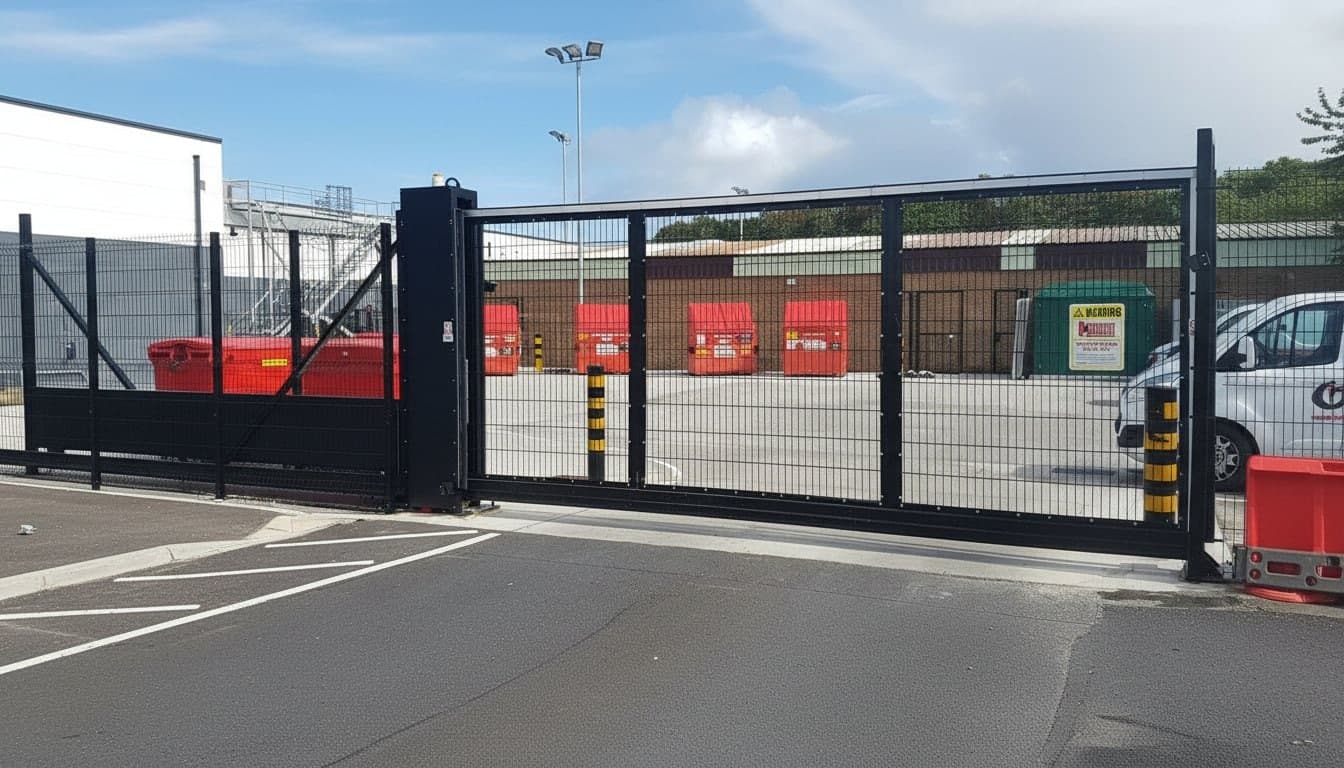
Configuration compounds it. For the same opening: a pair of swing leaves means two of everything mechanical, but each leaf is short and light; a single swing leaf is one operator carrying a long lever arm; a track slide gate is one leaf plus a rail and its foundation; a cantilever is one long counterbalanced leaf needing a longer run and more posts. Which is cheapest depends on the opening, which is why the swing-versus-slide decision is worth making before you price anything.

Infill, and the wind load it creates

Infill is the most underestimated cost driver on the job. Two gates of identical width, material and style — one open picket, one solid clad — are not the same gate.

  • Solid infill is more material and more weight, which is the obvious part.
  • It is also a sail, so posts and footings step up, hinges step up, and the operator has to be sized for the load.
  • In Miami-Dade and Broward that arithmetic happens inside the hurricane-zone design rules, which is a real engineering constraint rather than a preference.
  • Ornamental scrollwork is expensive for a different reason: it is labour, measured in hours at the bench, not in pounds of steel.

Material and coating system

Material sets the base cost; the coating system sets the lifetime cost, and near the water the two are not separable. Powder coat straight onto bare steel is a single barrier that fails at the first cut edge. Hot-dip galvanizing under the powder coat costs more on day one and behaves completely differently in year eight. Aluminum avoids rust and needs deeper sections for the same stiffness. Ornamental iron buys a look nothing else replicates and asks for maintenance in return.

The distance from the ocean should be an input to this decision, not an afterthought — the corrosion article covers why a coastal address changes the specification rather than just the maintenance schedule.

Welding arc flaring as a bead is laid on a steel frame in a dark shop
Fabrication hours, not just material

Posts, footings and what is already there

This is the part of the job that is invisible when it is finished and decisive ten years later, and it is where quotes diverge most quietly. New posts mean excavation, forming, steel and concrete, sized for the load the gate imposes.

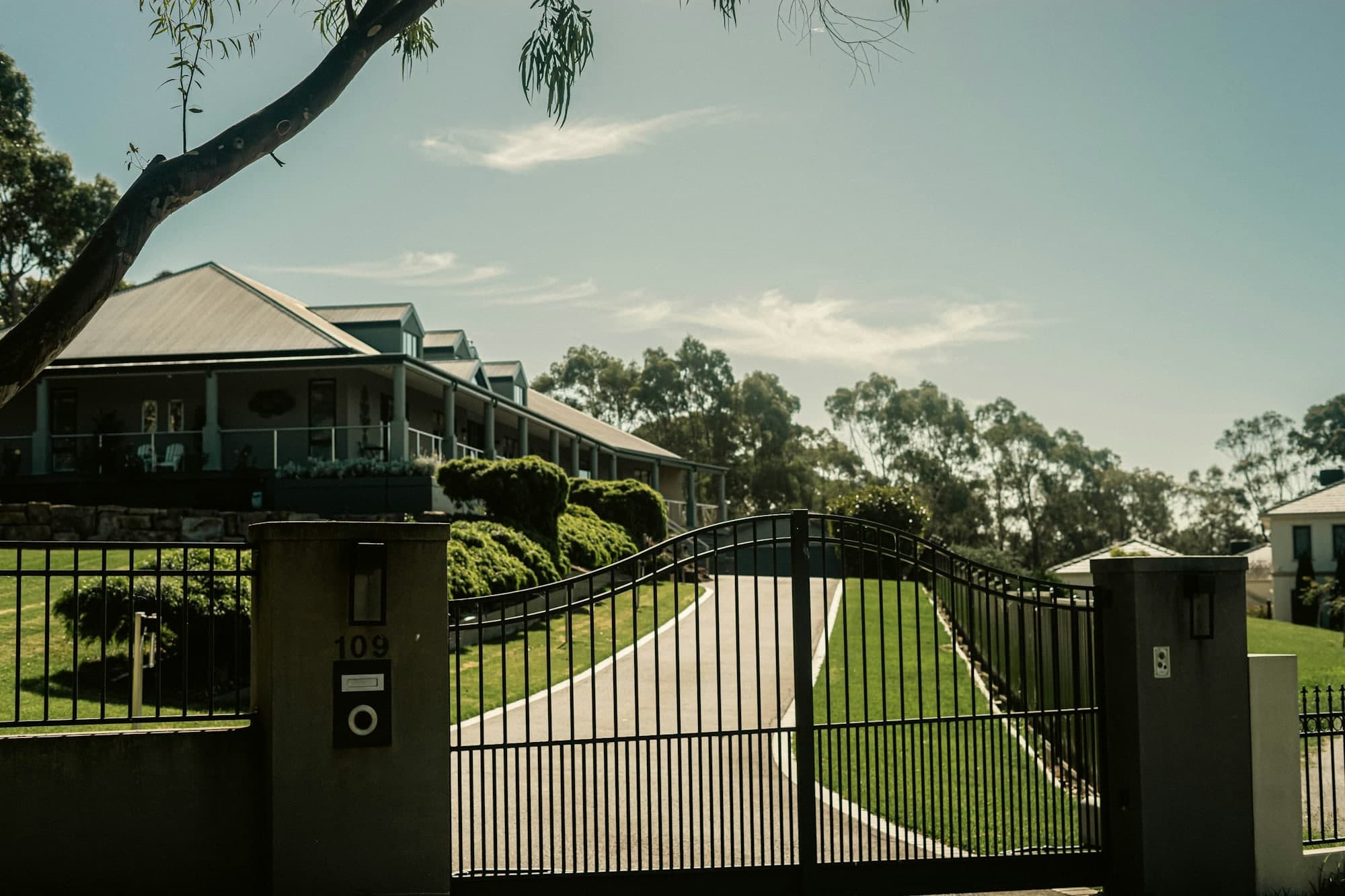
Hanging a gate on existing masonry pillars looks like the cheap option and sometimes is. It depends on what is inside them, which stucco hides completely. A decorative pillar built for a light ornamental gate, asked to carry a heavy solid one, is not a saving but a deferred failure — and finding out means opening it up.

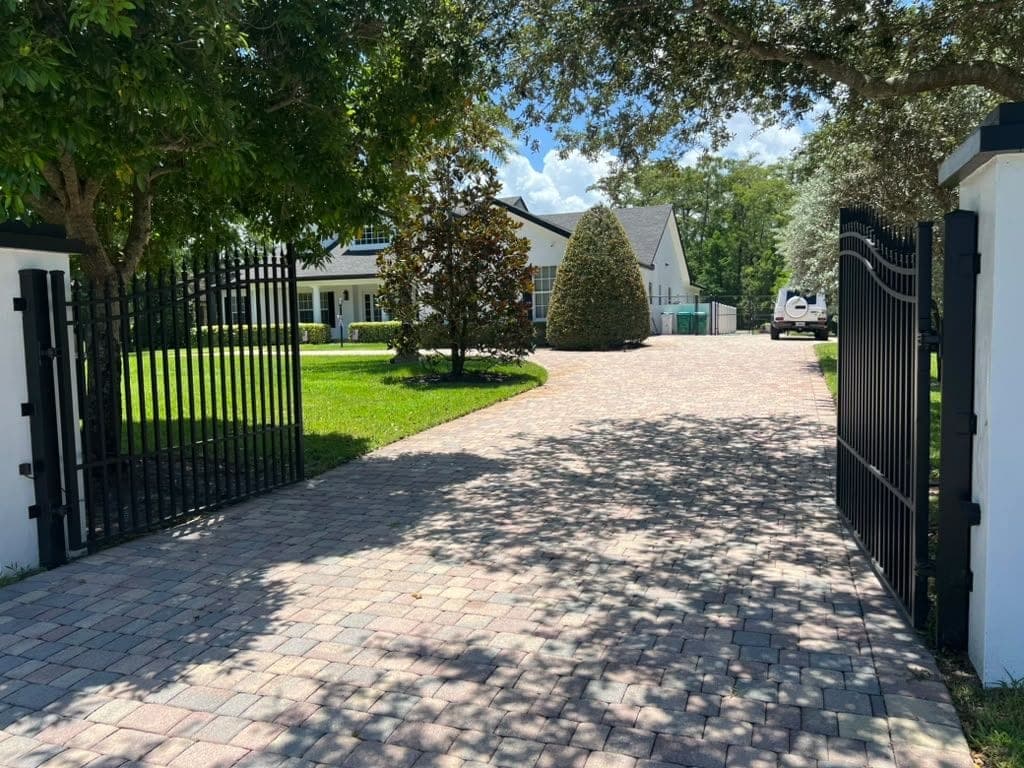
  • Existing driveway to cut and reinstate — pavers can be lifted and relaid, stamped concrete effectively cannot be matched.
  • Slope through the gate's path, which may force a configuration change or regrading.
  • Utilities in the way. Irrigation lines, low-voltage lighting and unmarked conduits all live where gate posts want to go.
  • Removal and disposal of whatever is there now.

Power, trenching and distance to the panel

An automatic gate needs power at the gate, and the distance from the nearest suitable supply is a line item people never anticipate. Trenching, conduit, backfill and reinstatement across a finished driveway or mature landscape costs real money — and it is the same trench that carries the loop wires, the photo eye runs and the intercom cable.

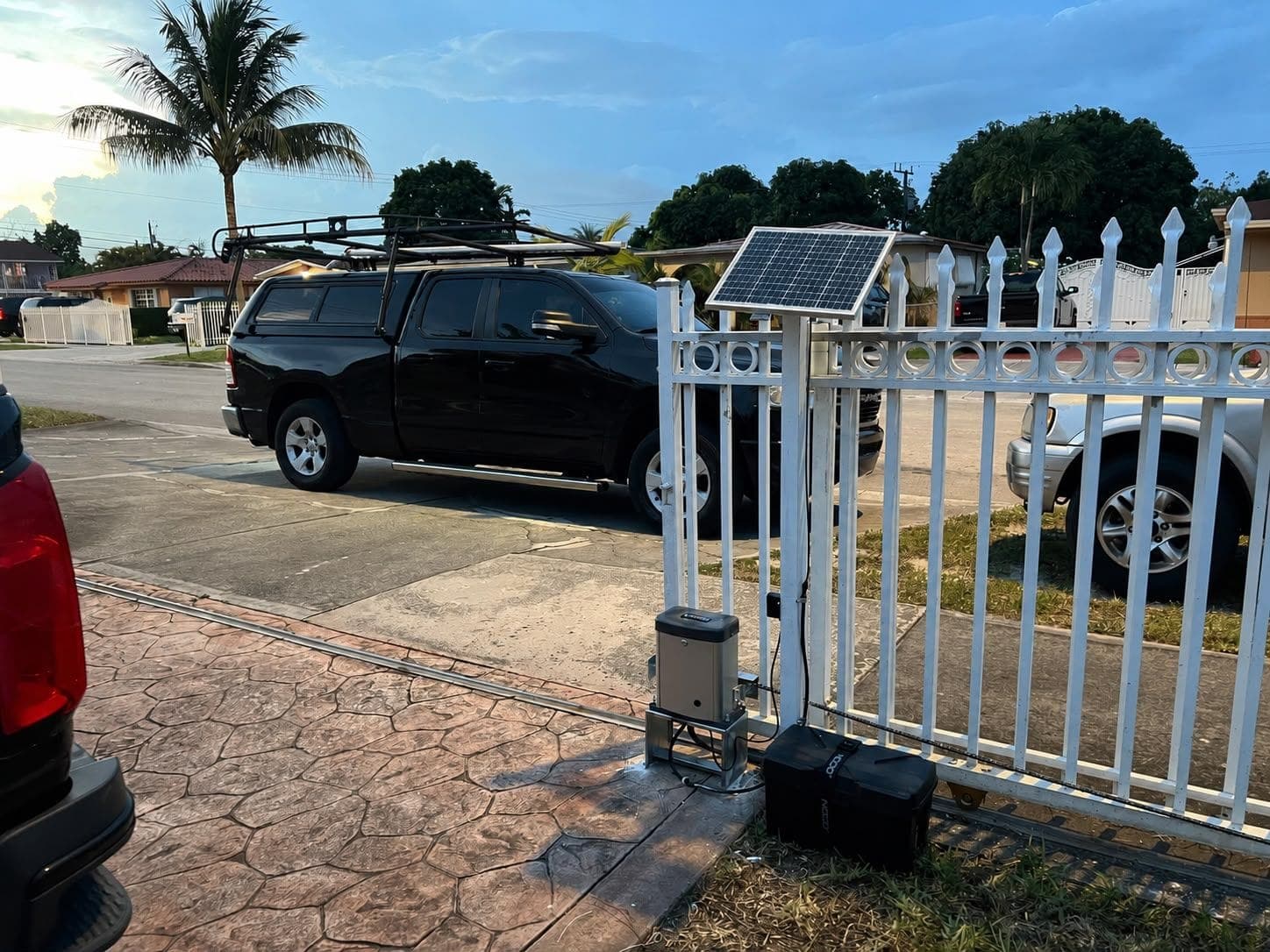
Solar is a genuine alternative when the trench is the expensive part, not merely an eco preference. Viability depends on the duty cycle — how many times a day the gate runs — and on how much unshaded sky the entrance gets, which under a canopy of live oaks is often less than it looks.

Solar panel mounted above a white aluminum gate powering its operator
Solar, when the trench is the cost

The operator class

Operators are rated by gate weight, leaf length and duty cycle. A residential machine and a high-cycle commercial operator are different classes of equipment, and the gap between them is not a brand-marketing gap.

Sizing an operator at the very edge of its rating saves money once and costs it repeatedly: a machine running at its limit every cycle has a short service life. A gate used forty times a day is a different specification from one used four times, even if the leaf is identical.

The items that get left off quotes

  • Safety devices. Photo eyes, contact edges and loops are not optional extras — see what each one does — and a quote without them is not a complete gate.
  • Access hardware. Keypads, callboxes, cellular units, RFID readers and their subscriptions.
  • Permits and inspection, which vary by municipality and are administered locally.
  • HOA architectural review, which is a timeline cost as much as a fee.
  • Site access. A crew that cannot get a truck near the entrance is a crew carrying steel by hand.
  • Reinstatement — landscaping, irrigation heads, paving, sod.

How to compare two quotes honestly

  1. Check they describe the same configuration and the same infill. This is the most common mismatch by far.
  2. Check the coating system by name, and the fastener and hardware grade.
  3. Check what the posts and footings are, and whether existing pillars are being reused or replaced.
  4. Check the operator model and its rating against the gate's actual weight and duty.
  5. Check which safety devices are included and whether they are monitored.
  6. Check who pulls the permit and who handles reinstatement.

A gate is a structure, a machine and an access system bought as one item, which is exactly why a number from a photograph is worthless. What a real conversation needs is the opening width, the slope, the setback, the distance to power, what is standing there now, and how you want people to get in. Send us those — for Pinecrest, Davie, Wellington or anywhere else on the coverage list — and the answer will be about your entrance rather than about an average.

Published by Local Gate Repairs on . Written by the business rather than by a named author — this site does not publish a byline it cannot stand behind. General guidance for South Florida properties: every gate, driveway and operator is different, and permitting is administered locally, so treat this as a starting point rather than a specification for your own entrance. What this site does and does not claim is set out in full on standards & sources.

Next step

It starts witha drawing.

On-site consults across South Florida. You see the gate on your own entrance before you commit to anything.

Call NowGet a Quote