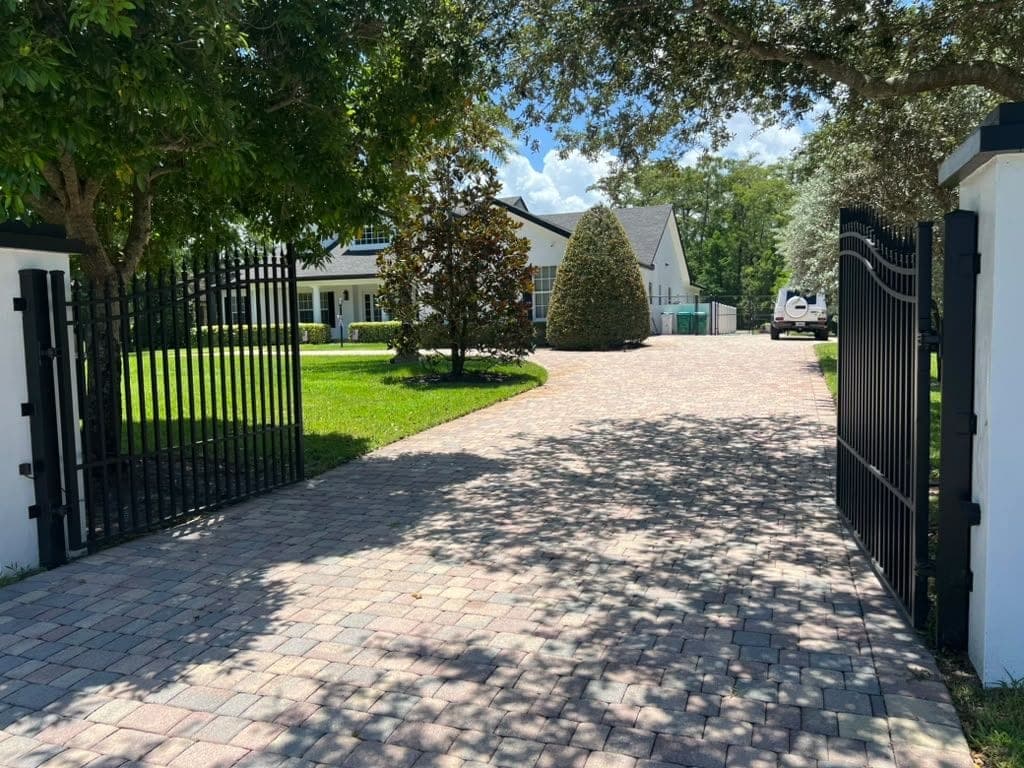
Black swing gate open onto a paver driveway with a lawn either side

Design · Driveway gates

Most people pick a gate style from a photograph. The driveway usually picks it for them — and slope and setback are the two measurements that decide it before taste gets a vote.

July 31, 20265 min read1,198 words

One version of this decision is about looks, and it is the least important. A swing gate and a slide gate can be built from the same material, in the same style, to the same standard. What separates them is geometry: how much level ground the gate needs, and how much room the car needs while it moves.

Two measurements settle most of it. Take a tape to the driveway before you look at a design.

  1. Setback: from the edge of the road surface to where the gate would stand. This is how much car fits off the street while the gate is opening.
  2. Slope: the rise across the gate's swing path, measured over the full width of the leaf. A long level, a spirit app and a straight board will get you close enough to have a useful conversation.

Why slope is the swing gate's problem

A swing gate sweeps a quarter circle. Every point on the bottom rail traces that arc at a fixed height above the hinge post. If the ground rises through the arc, the gate collides with it — that is the whole problem, and it has nothing to do with how good the gate is.

Even a driveway that looks flat rarely is. Almost every South Florida apron is crowned or pitched for drainage, and a couple of inches of fall across a twelve-foot leaf is common. That is usually absorbed by ground clearance. A genuine slope up from the road is not.

The real workarounds, in order of preference

  • Swing the other way. If the ground falls away from the gate on the street side and rises on the property side, the gate swings out instead of in. This is the cleanest fix and often the cheapest — but it eats setback, and on a short driveway that trade is unaffordable.
  • Raise the hinge line and accept the gap. Lifting the leaf clears the rise, at the cost of a bottom gap that looks wrong on a solid gate and defeats the point if you are keeping a dog in.
  • Rising hinges. The leaf climbs as it opens, on a helical hinge. They work, they are a genuine solution on moderate rises, and they add load and wear the operator has to be sized for.
  • Step the ground. Regrading or cutting an arc-shaped relief into the driveway is real construction, and on a paver drive it is visible forever.
  • Stop fighting it and slide.

Short driveways and the car in the street

This is the failure people underestimate. An inward-swinging gate needs the car to stop clear of its arc, which means the car waits with its back end in the road while the gate opens. On a quiet cul-de-sac that is an inconvenience. On a through road at school-run time it is genuinely dangerous, and it is the reason a lot of otherwise beautiful gates end up propped open permanently.

Do the arithmetic honestly. Measure a real vehicle — a full-size SUV or pickup is around eighteen to twenty feet, and a truck with a hitch is longer. Add the gate's swing depth. If the total exceeds your setback, an inward swing means somebody sits in the road.

Outward swing solves the waiting problem and creates another: the leaf sweeps into the road or the sidewalk, and many municipalities and HOA committees will not permit it. Check before you design around it.

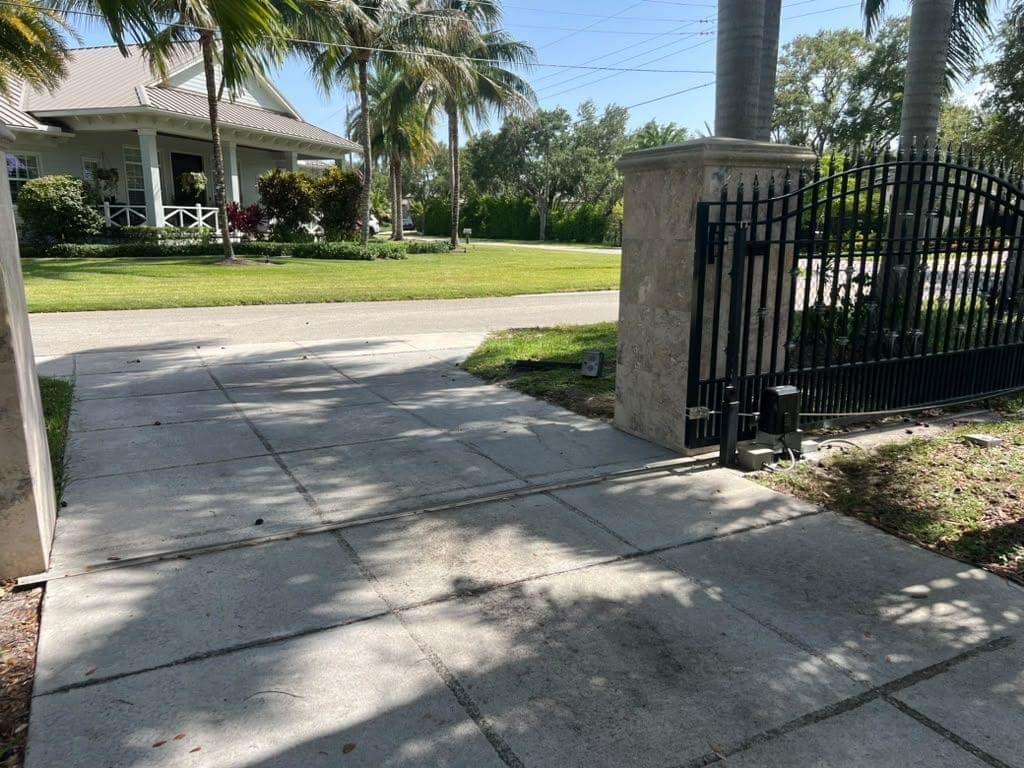
Black sliding driveway gate beside a stone pillar with palms behind
A slide gate needs run, not arc

What a slide gate needs instead

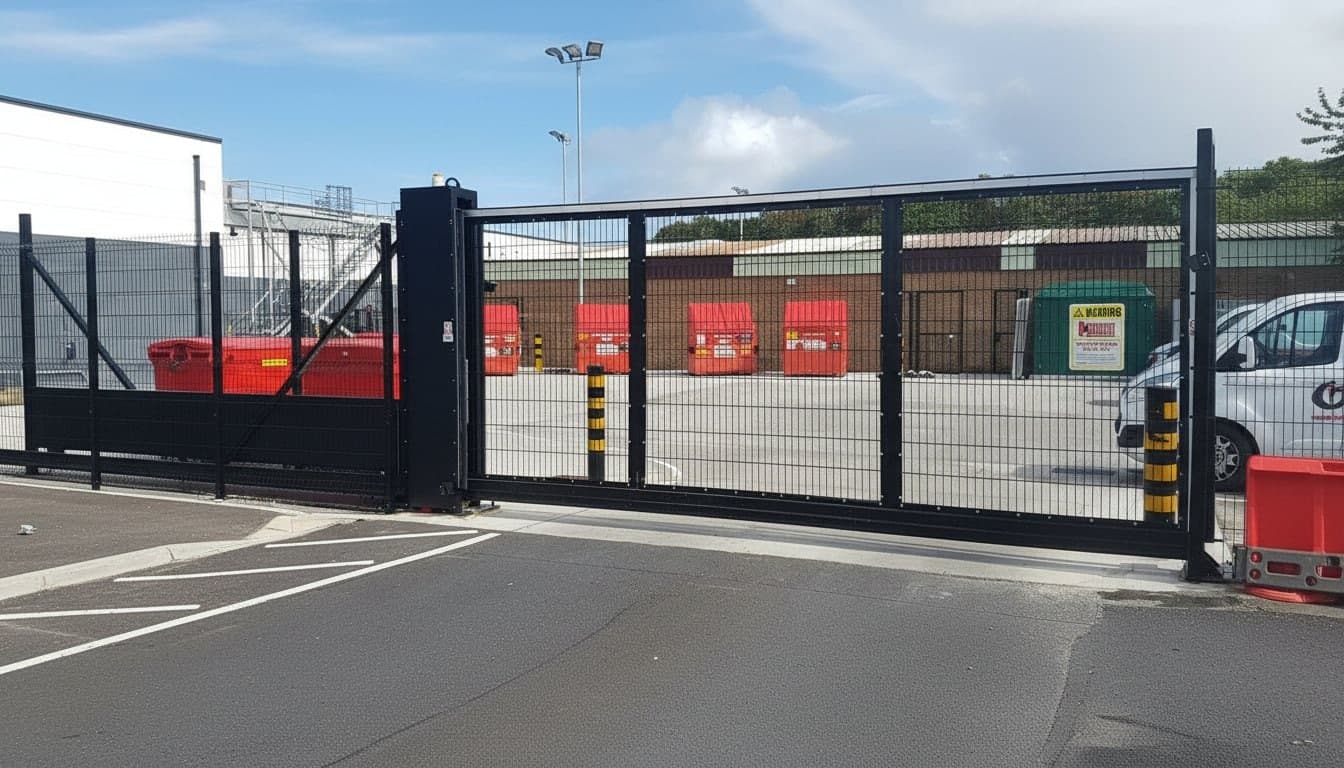
A slide gate trades depth for width. It needs a clear run along the fence line to park itself in, and that run is what people forget to check. There are two families, and they need very different amounts of it.

Track (V-track or roller)

  • Needs a clear run roughly equal to the opening width.
  • Rides on a rail set into or onto the driveway, so the run must be level and true.
  • Lower cost, lighter frame, less material.
  • The track is the maintenance item: sand, leaf litter, sediment and standing water all live in it.

Cantilever

  • Needs a longer run — the counterbalance tail is typically around half the opening again.
  • No ground track at all. The gate hangs from rollers on posts and floats over the driveway.
  • Better where the drive floods, silts up or is crossed by heavy vehicles.
  • Heavier frame, more posts, more material, more cost for the same opening.

In this part of Florida the cantilever argument is stronger than it looks on paper. Ground tracks and afternoon downpours are a bad combination: a rail below driveway level collects sediment every storm, and a gate ploughing through it drags, trips its force limit and wears rollers flat. If the entrance sheds water across the gate line, budget for cantilever or budget for cleaning the track.

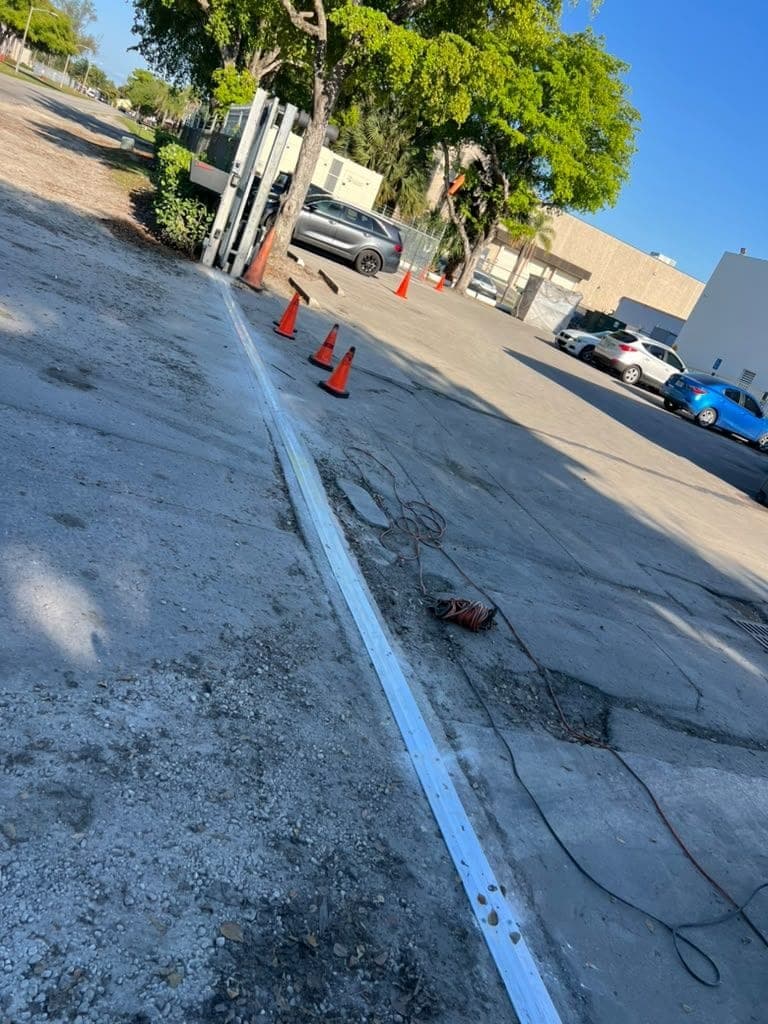
Newly laid ground track running along a street where a sliding gate rolls
New track, laid level and true

Wind, weight and the thing nobody measures

Slide gates are long. A twenty-foot cantilever leaf clad solid is a sail with a serious lever arm on its posts, and that is a structural question about post size and footing depth well before it is an aesthetic one about infill. It is also why a solid-infill slide gate on an exposed lot is a different job from the same gate behind a hedge. The hurricane-zone rules in Miami-Dade and Broward make that arithmetic non-optional.

Weight then decides the operator. Swing operators are rated by leaf length and weight; slide operators by gate weight and duty cycle. A gate specified without the operator in mind is how you end up with a machine working at the edge of its rating from day one, which is a short life dressed up as a bargain.

The short version

  • Meaningful slope through the arc, or a short setback: slide.
  • Plenty of setback, level approach, and you want the look of a pair of leaves opening: swing.
  • Long clear run, drive that floods or silts, heavy traffic: cantilever.
  • No side run at all and no depth either: this is where a bi-parting slide, a vertical pivot or a folding leaf earns its cost — and where fabrication stops being decoration and starts being the solution.

Every one of these is decided on site with a tape measure and a level, which is why the useful first step is not a catalogue. We do this across Coral Gables, Weston, Boca Raton and every other city on the coverage list. Send us the driveway — a photo from the street and a rough setback is enough to tell you which family you are in.

Published by Local Gate Repairs on . Written by the business rather than by a named author — this site does not publish a byline it cannot stand behind. General guidance for South Florida properties: every gate, driveway and operator is different, and permitting is administered locally, so treat this as a starting point rather than a specification for your own entrance. What this site does and does not claim is set out in full on standards & sources.

Next step

It starts witha drawing.

On-site consults across South Florida. You see the gate on your own entrance before you commit to anything.

Call NowGet a Quote