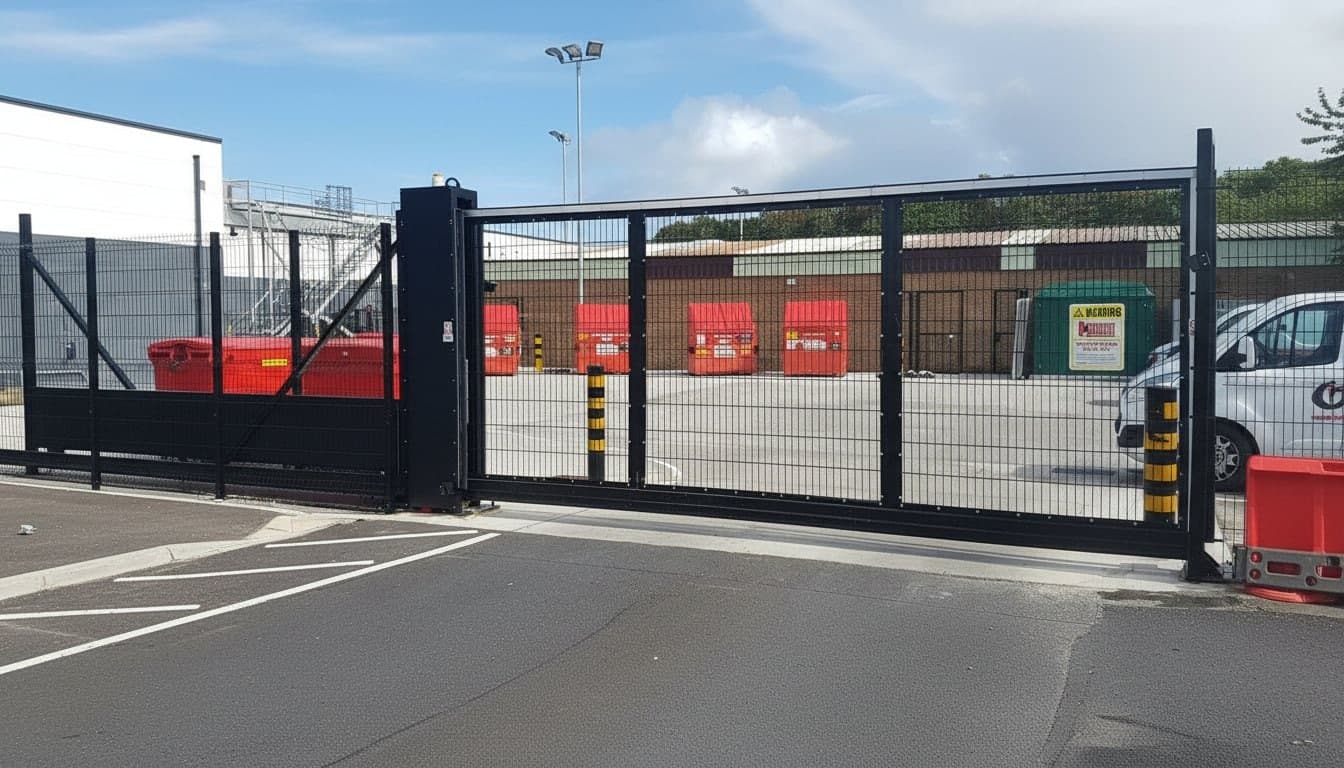
Long black mesh-infill sliding gate closed across a yard entrance with its operator column beside it

Design · Slide gates

A rolling gate carries its weight on the driveway. A cantilever gate carries it on the posts and hangs the rest in mid-air. Everything else about the two — cost, run, wear, lifespan here — follows from that one difference.

July 31, 20266 min read1,264 words

Once a site has ruled out swinging — because the ground rises, or the setback is short, or a car would have to wait in the road — the next question is which kind of slide gate. There are two, they look almost identical when closed, and they are completely different machines.

A rolling gate sits on wheels that run along a track fixed to or set into the driveway. The ground carries the weight; the posts just keep the gate upright. A cantilever gate touches the driveway nowhere at all: it hangs from roller trucks bolted to two posts on one side, and a counterbalance tail behind those posts holds the rest of the leaf out over the opening like a diving board.

The argument that settles it here

In South Florida, the ground is usually the deciding factor, and it is not a close call as often as people expect.

A ground track is a channel at driveway level. Every afternoon downpour sends sediment, sand, mulch and leaf litter across the entrance, and the track is the lowest point available for all of it to settle in. A gate ploughing through packed grit drags, draws more current, trips its force limit and wears its rollers flat — and the same grit held in a salt film is an abrasive paste, which the piece on salt air and gate hardware gets into properly.

  • An entrance that sheds water across the gate line will silt its track up on a schedule set by the weather, not by you.
  • Anywhere that floods, even briefly, has a track full of debris the moment the water goes down.
  • Heavy vehicles crossing a surface-mounted rail bend it, and a bent track is not adjusted back — it is replaced.
  • Root heave and driveway settlement both put a kink in a rail that must stay dead straight to work.

A cantilever has none of those failure modes because it has no track. That single fact is why the type dominates on commercial and flood-prone entrances, and why it is worth pricing on a residential site that gets standing water even once a year.

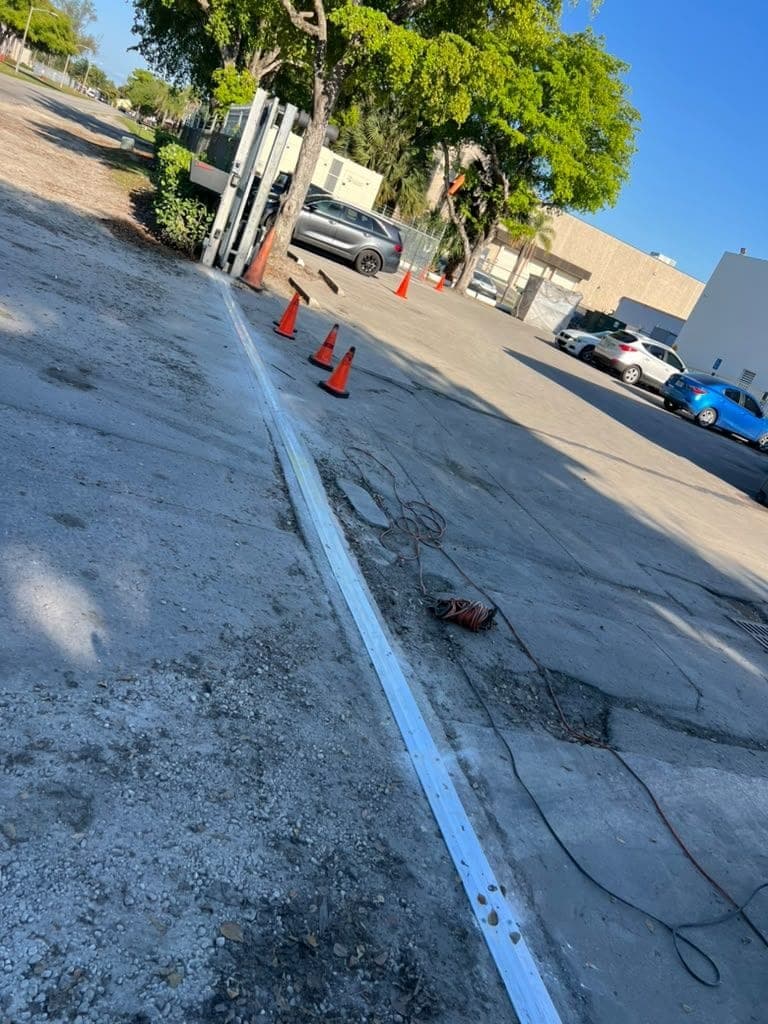
Newly laid ground track running along a street where a sliding gate rolls
A rail only works while it is straight, level and clear

How much room each one needs

This is where the cantilever gives the advantage back. A rolling gate needs a clear run beside the opening roughly equal to the opening itself — twelve feet of gate needs twelve-odd feet to park in. A cantilever needs that plus its counterbalance tail, which is typically around half the opening again, so the same twelve-foot opening wants closer to eighteen feet of fence line.

That extra run is not negotiable and it is not a matter of engineering it away. The tail is what holds the leaf up; shortening it does not save material, it makes the gate sag and destroys the roller trucks. If a property genuinely does not have the room, the real options are a bi-parting arrangement that splits the run between both sides, a rolling gate with the track maintenance accepted as a chore, or a different gate type altogether — which is the point at which fabrication stops being decoration and starts being the answer.

Posts, footings and where the load goes

The two types load their posts in completely different ways, and this is where corner-cutting shows up years later.

A rolling gate's posts are essentially guides. They keep the leaf vertical and take wind load, but the weight is on the ground. A cantilever's posts carry everything: the full weight of the gate, the overturning moment from the leaf hanging out over the opening, and the wind load on all of it. Those are two substantial footings, and in the sandy fill common across the region they need real depth rather than a token pour.

This is also why a cantilever costs more for the same opening even before the extra steel in the tail is counted. You are buying frame, posts and footings sized for a structure that holds itself in the air. A quote that prices a cantilever like a rolling gate has left something out, and it is usually underground where nobody will see it until the gate starts to droop at the leading edge.

Side by side

Rolling on track

  • Needs a run roughly equal to the opening — the compact option.
  • Lighter frame, smaller posts, lower cost for the same width.
  • Weight goes into the ground, so footings are modest.
  • The track is a permanent maintenance item: sediment, sand, standing water, bent rail.
  • Rollers and rail wear together, and a worn rail takes new rollers with it.

Cantilever

  • Needs the opening plus roughly half again for the counterbalance tail.
  • Nothing touches the driveway — no rail to silt up, flood or be run over.
  • Heavier frame, two substantial posts, deep footings, higher cost.
  • Wear concentrates in the roller trucks, which are a serviceable assembly.
  • Clearly the better answer on flood-prone or heavily trafficked entrances.

What wears out on each

Both types tell you they are unhappy long before they stop. Learning the noises is most of the diagnosis, and the broader version of that is in reading the signs a gate operator is about to fail.

  • Rolling: flat-spotted wheels, a rumble that changes pitch at one point in the travel, a rail that has lifted at a joint, and grit packed into the channel.
  • Cantilever: roller trucks that click or grind, a leading edge that has dropped, and a gate that is harder to move by hand near the fully open position.
  • Both: a chain or rack that has stretched or worn, and an operator working harder than it did last year to do the same job.
  • Both: a gate that has grown heavy is a gate whose operator is being shortened — the machine is the thing that pays for a neglected running gear.
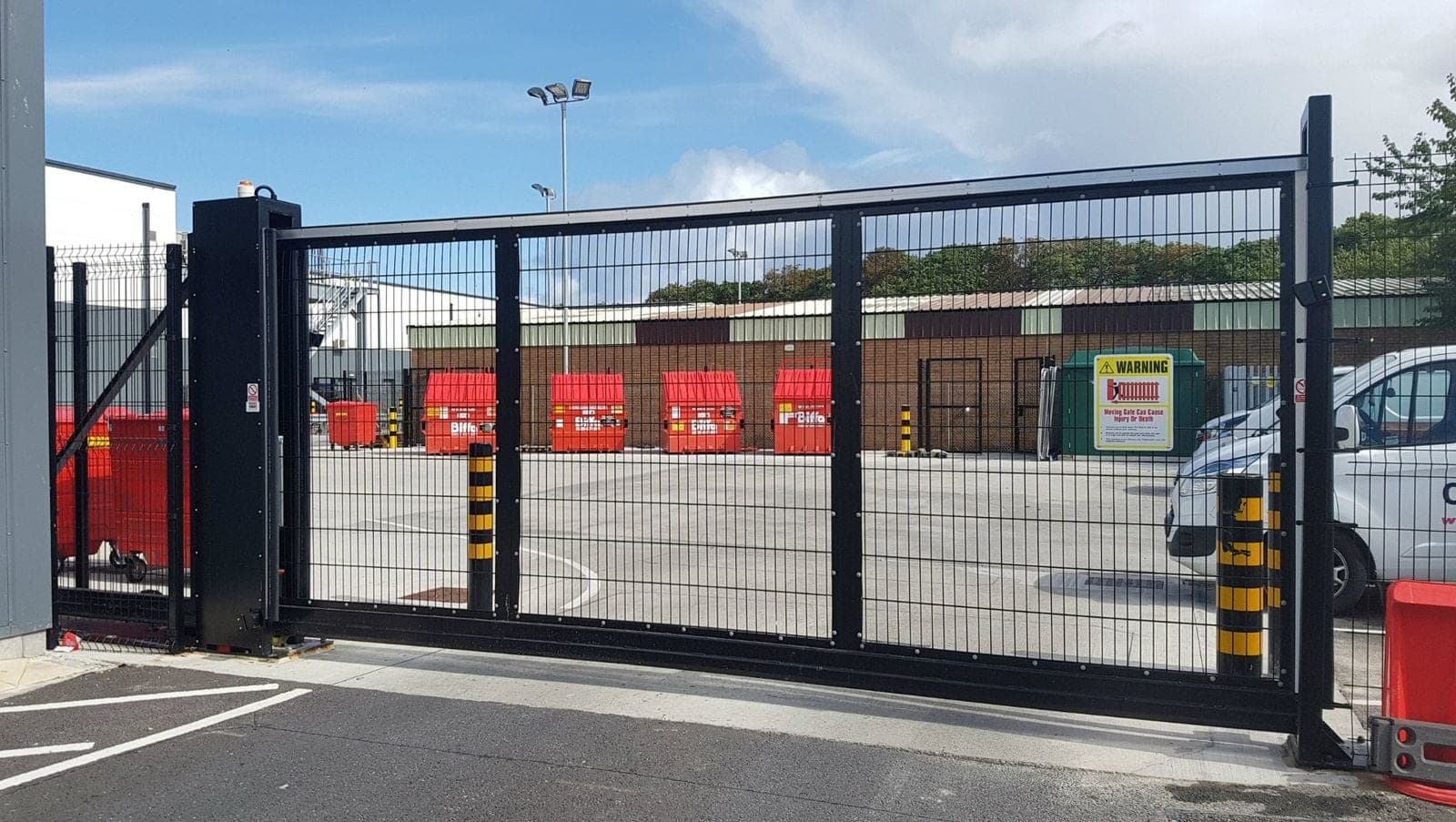
Black mesh sliding gate at a commercial yard with warning signage and bollards either side
Commercial duty is where the cantilever earns its cost

Choosing between them

  • Water crosses the gate line, the entrance floods, or trucks run over the threshold: cantilever.
  • The run beside the opening is tight and the driveway stays dry and stable: rolling, with the track treated as something that gets cleaned.
  • High cycle count, shared entrance, or anything in commercial service: cantilever, with the footings sized properly.
  • Long span and solid infill: whichever type you pick, the wind load on that leaf is the structural question that governs the posts.

The honest test is a tape measure along the fence line and a look at the entrance after a heavy rain. We install and repair both types across Miami, Pompano Beach and the rest of the coverage area. Send us a photo of the run and roughly how the water moves across the entrance, and the answer is usually obvious from those two things.

Published by Local Gate Repairs on . Written by the business rather than by a named author — this site does not publish a byline it cannot stand behind. General guidance for South Florida properties: every gate, driveway and operator is different, and permitting is administered locally, so treat this as a starting point rather than a specification for your own entrance. What this site does and does not claim is set out in full on standards & sources.

Next step

It starts witha drawing.

On-site consults across South Florida. You see the gate on your own entrance before you commit to anything.

Call NowGet a Quote