Material is the first line on a gate specification and the one that quietly sets everything after it — the weight, the operator class, the post size, the coating and how the gate looks in year eight.
July 31, 20266 min read1,297 words
Most people choose a gate material the way they choose a countertop — by looking at it. That works right up until the gate is twenty feet across, hangs off two posts in sandy fill, and gets pushed back and forth by a machine several thousand times a year within sight of salt water. At that point the material is not a finish. It is a structural decision that sets the weight, the post size, the operator class and the maintenance bill.
Four things separate the candidates, and none of them is the colour.
01Weight per square foot. This decides the operator class, the hinge or roller assembly, and the footing under the posts.
02Stiffness. A long leaf has to stay flat under its own weight and under wind — a property of the alloy and the section depth, not of the price.
03How it behaves in chloride. Not just whether it rusts, but where it starts and how visible the first year of it is.
04Repairability. When a truck clips the leaf, is the damage cut out and welded, or is a panel replaced?
Aluminum
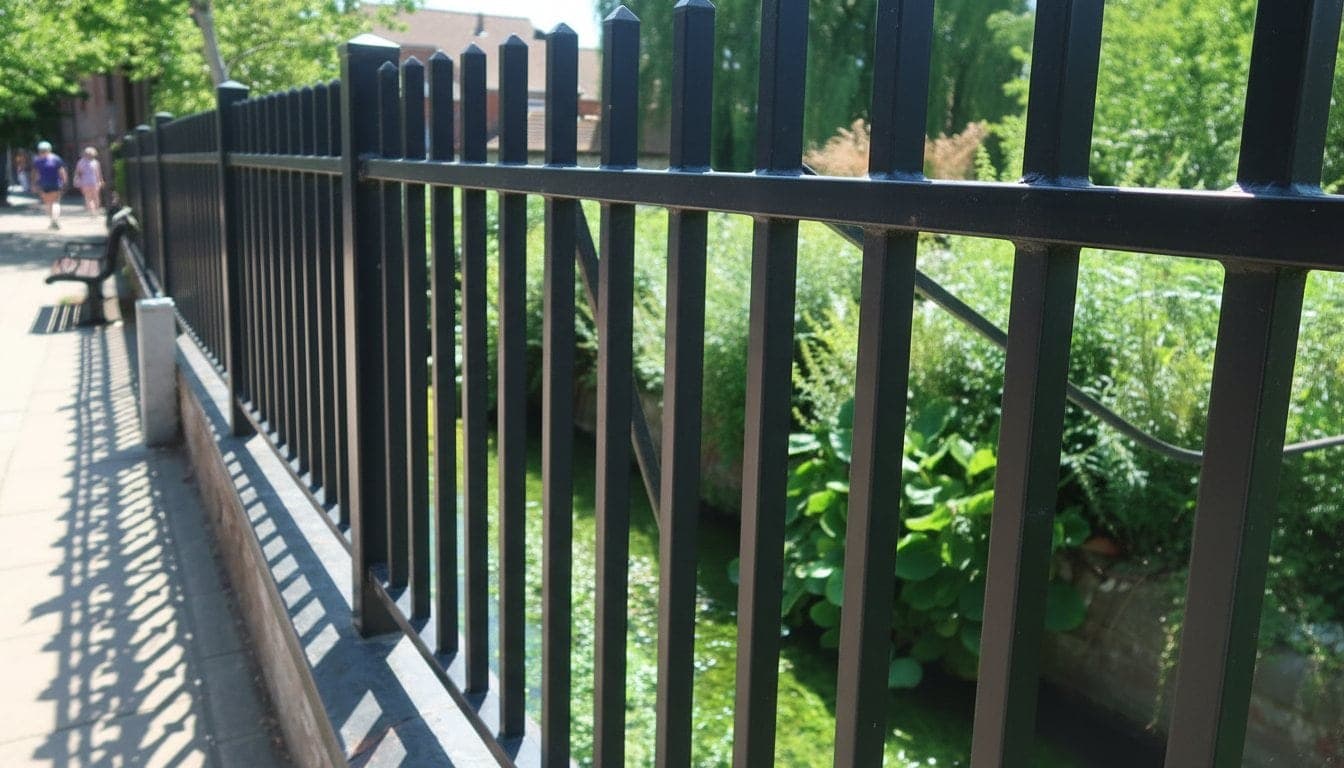
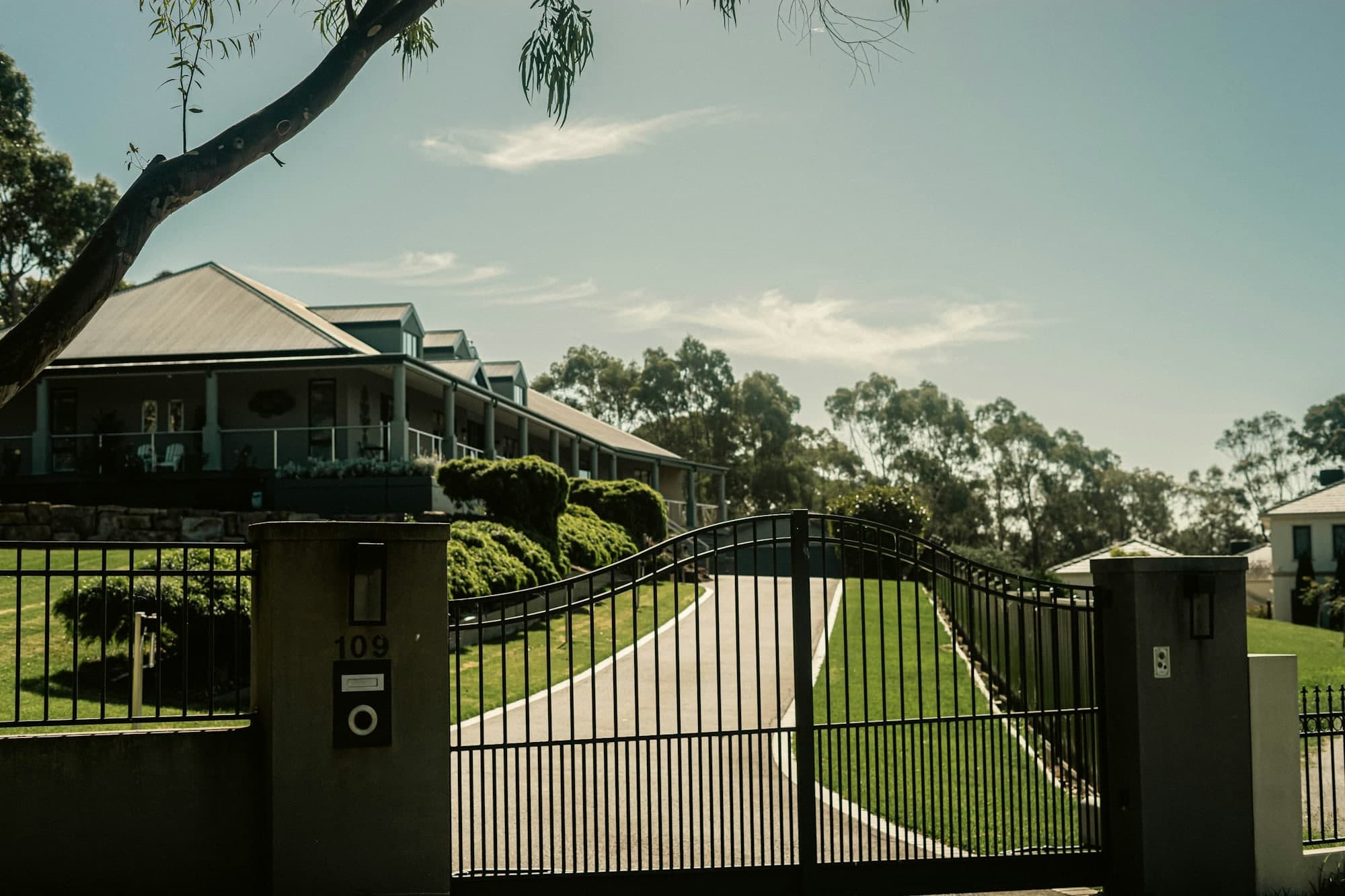
Aluminum is the default for coastal residential work for a good reason: it forms its own oxide skin and does not bleed rust down a stucco pillar. It is also roughly a third the density of steel, which cascades pleasantly through the whole system — a lighter leaf means smaller hinges, a smaller operator, less load on the post, and a gate that a person can move by hand when the power is out.
The trade is stiffness. Aluminum is roughly a third as stiff as steel, so a leaf needs deeper sections and more internal bracing to hold the same line over the same span. A well-made aluminum gate is not a light gate with thin walls — it is an engineered frame that happens to weigh less. If a long aluminum leaf visibly flexes when you push the middle of it, that is a specification problem, not a property of the metal.
The other honest limitation is repair. Aluminum welds beautifully in a shop and less forgivingly on site, and putting a damaged section right usually means refinishing it rather than touching in a spot.
Steel, and what has to be done to it
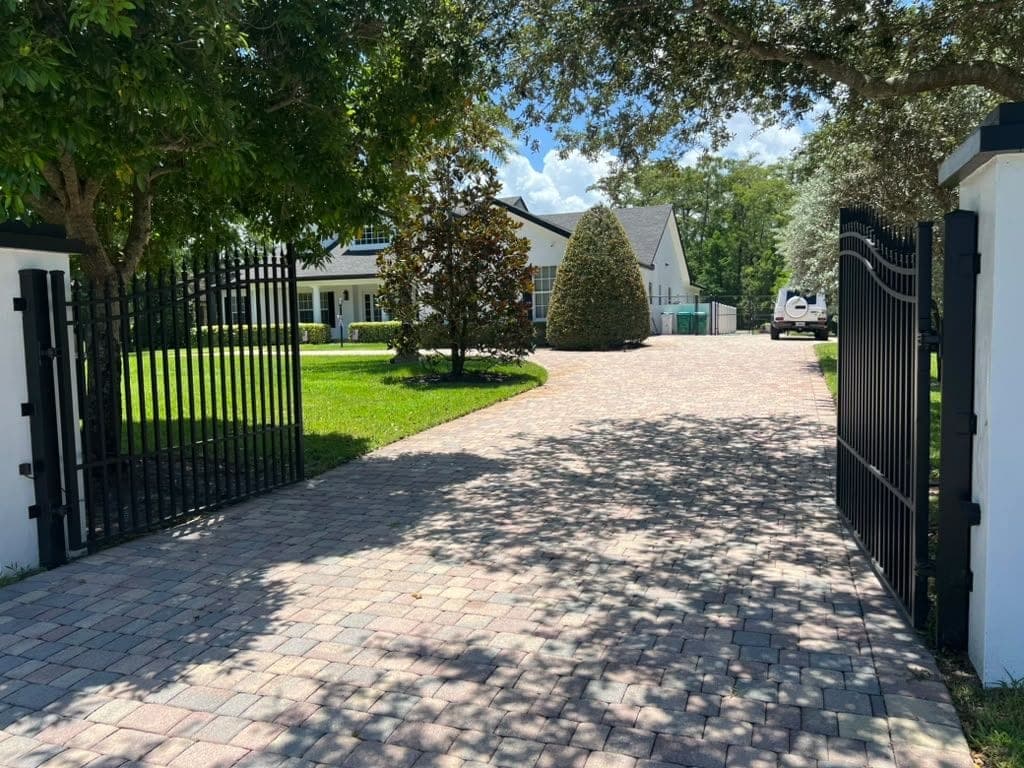
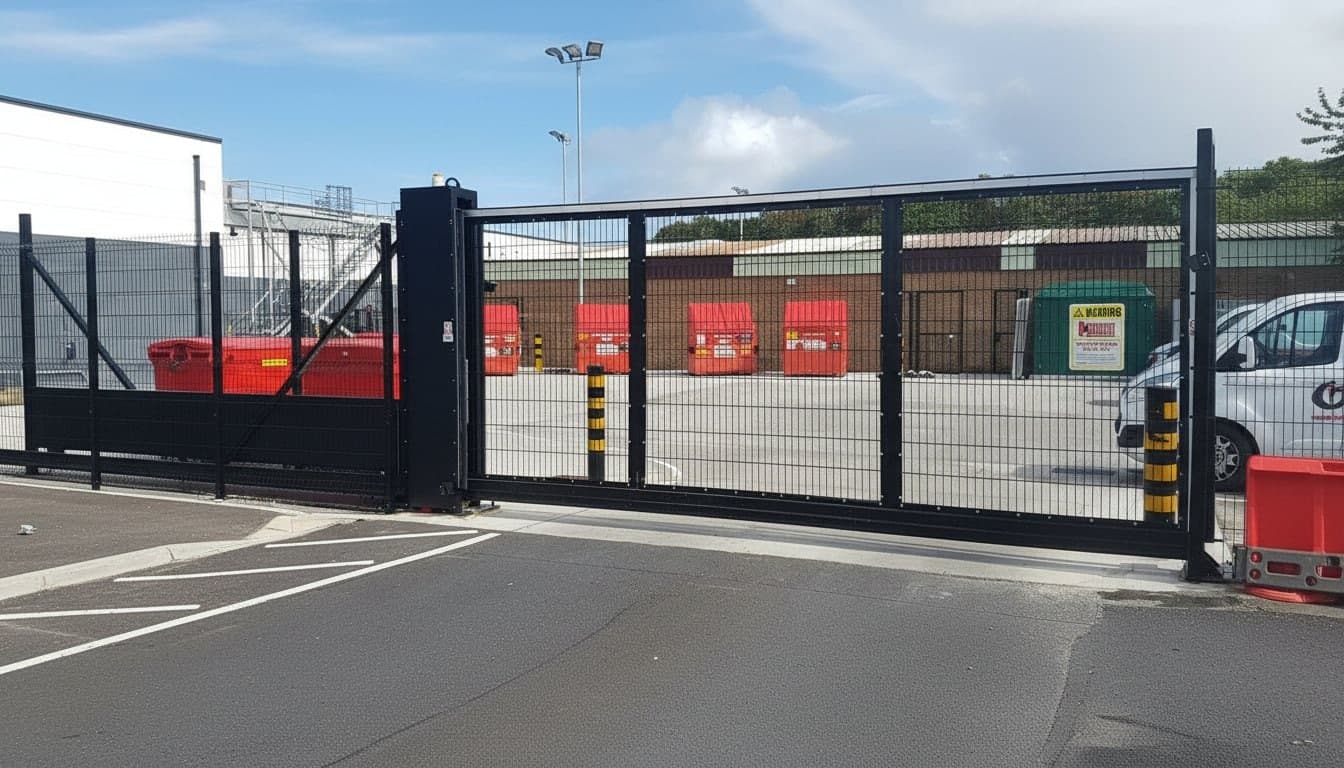
Mild steel box section is the workhorse. It is stiff, cheap by weight, welds anywhere with anything, and can be cut and rebuilt years later by whoever is standing in front of it. For a wide slide gate, a commercial opening or anything carrying a serious span, steel is often the only sensible frame.
Steel's entire weakness is that it needs a coating system and it will punish a cheap one. Powder coat on bare steel is a single barrier: the first chip, drilled hole or ground weld becomes a corrosion site, and rust creeps under the film from there. Hot-dip galvanizing beneath the powder is a different animal, because zinc protects sacrificially at the damage as well as sealing over it. Near the water that duplex system is the specification worth paying for, and there is more on why in what salt air actually corrodes.
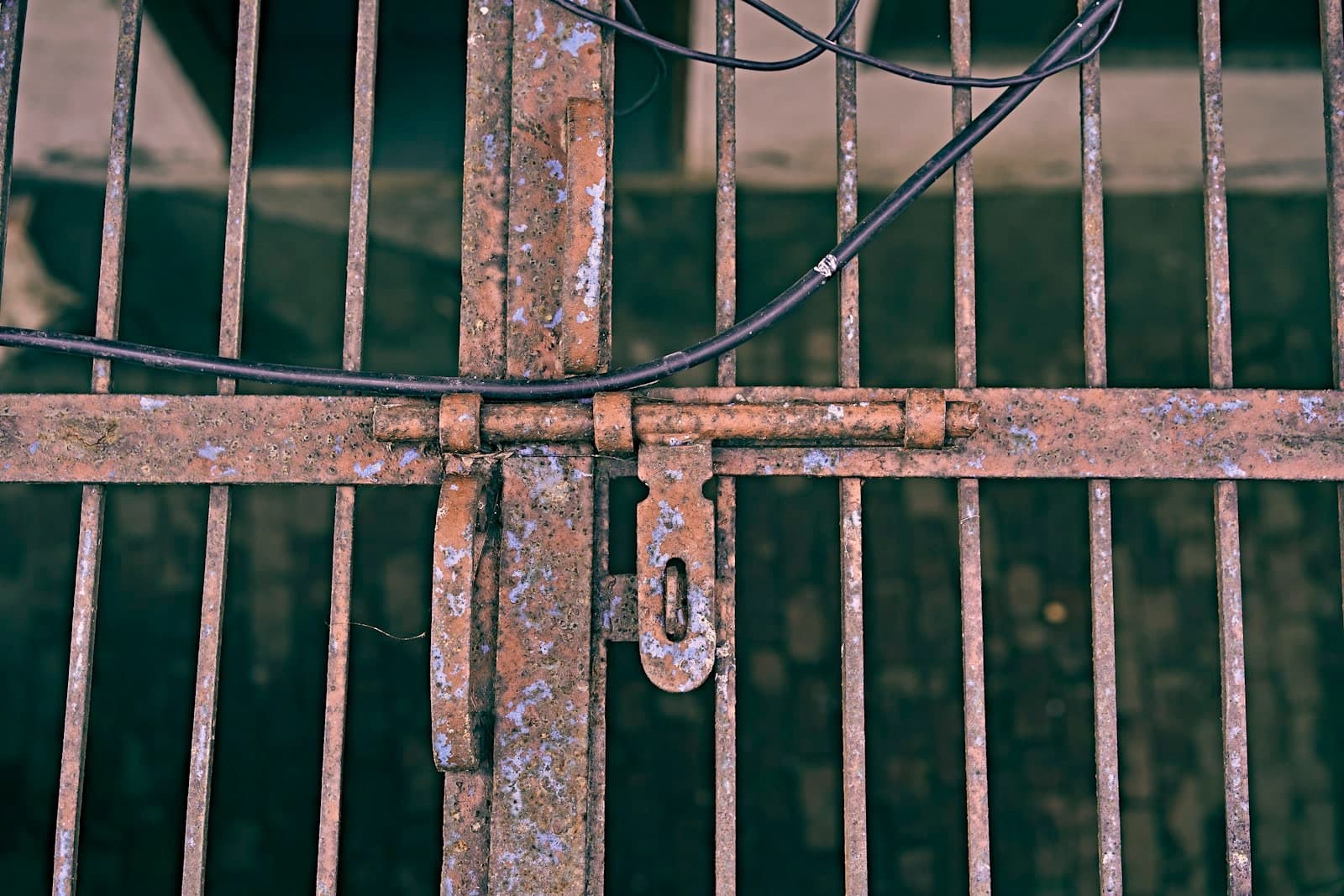
A coating system that ran out of road
Ornamental and wrought iron
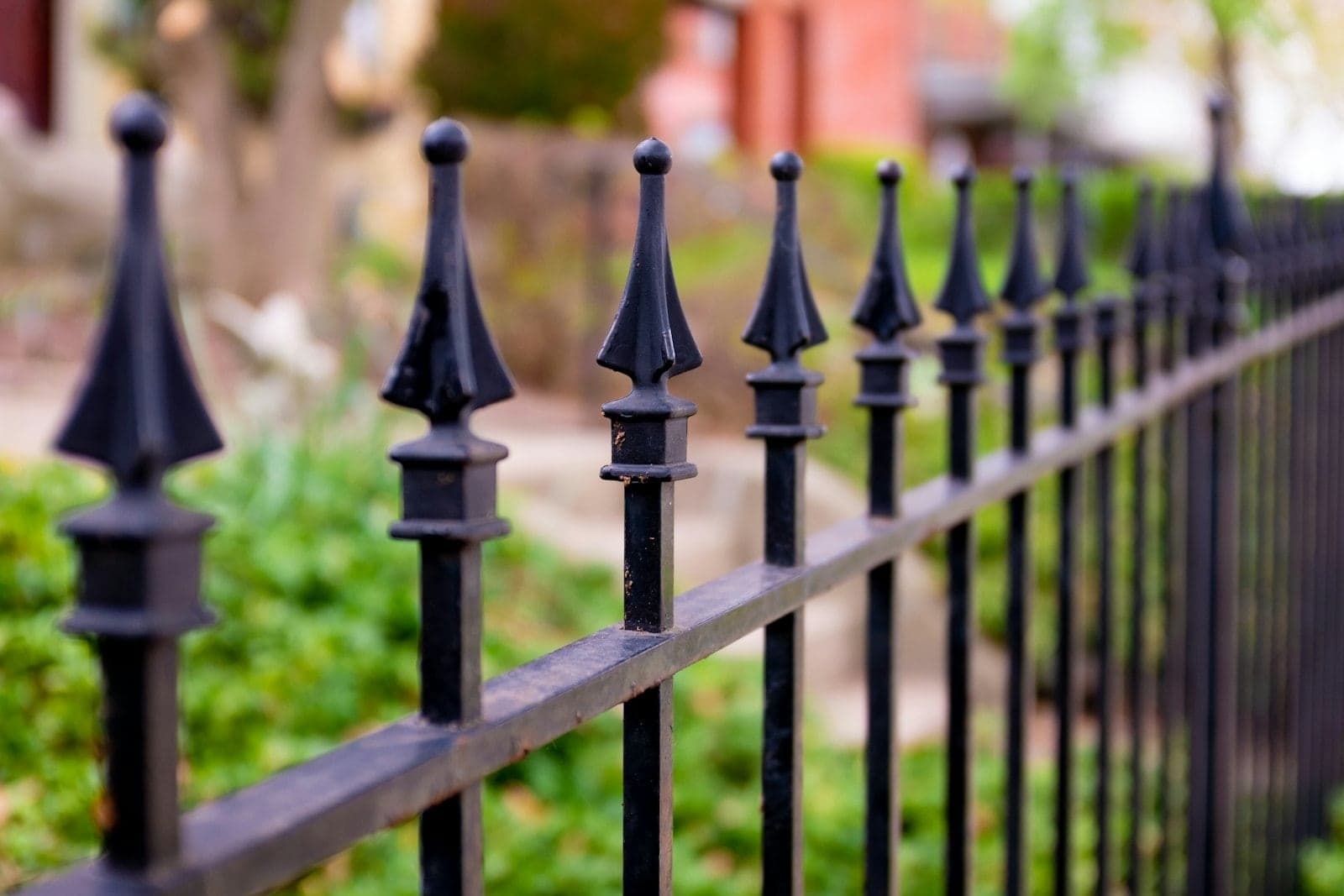
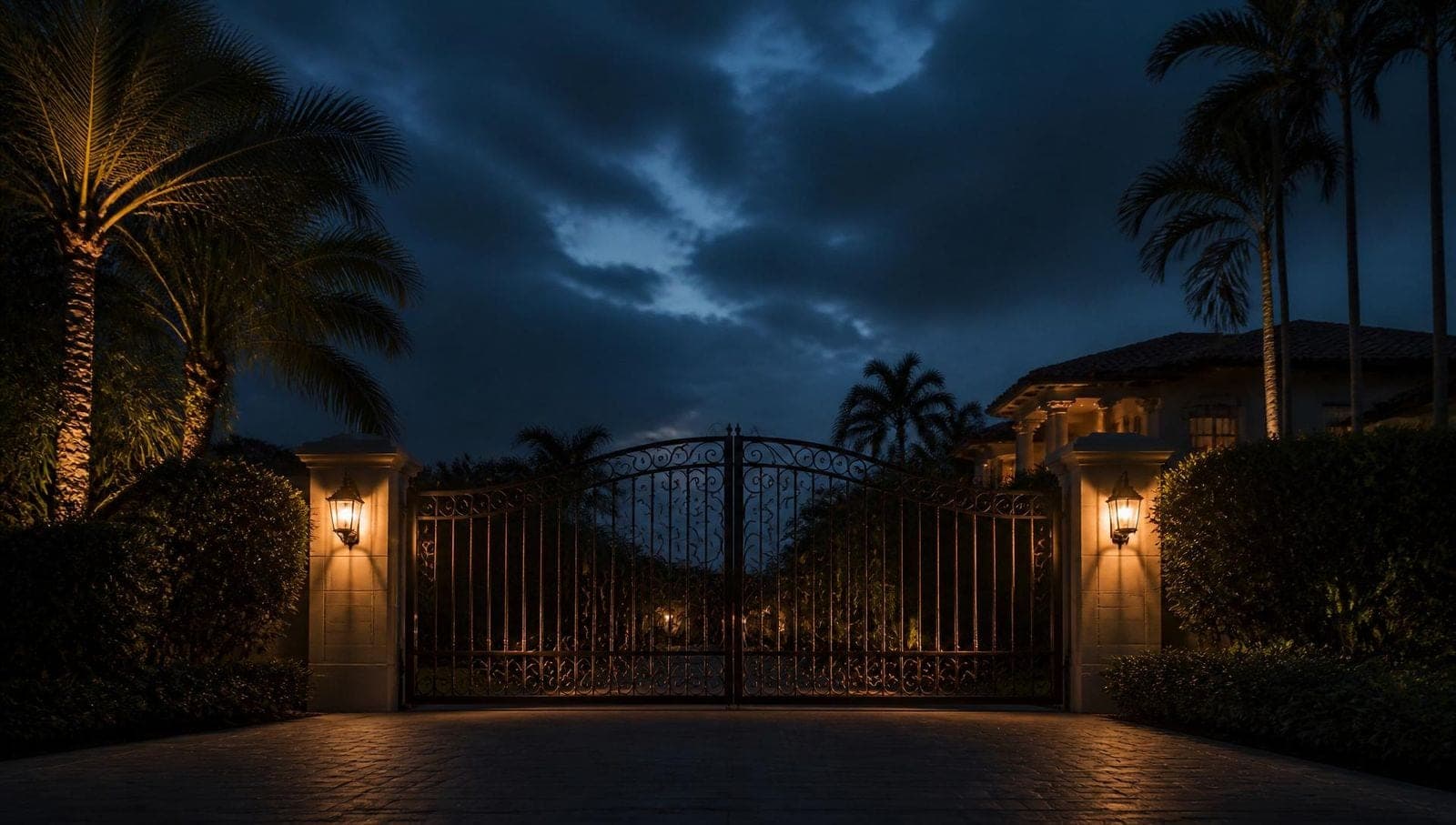
Ornamental iron is chosen for something the other materials cannot fake: solid bar stock, real scrollwork, castings with weight behind them. Structurally it behaves like steel, and it carries the same coating obligation with an added complication — every scroll, collar and picket junction is a place water sits and a spray gun struggles to reach evenly.
That is a maintenance commitment rather than a defect. Owners who touch up damage as it appears and keep the joints clean get decades out of an iron gate; owners who treat it as a permanent object get the picture above. Iron is also heavy, which means bigger hinges, deeper footings and a larger operator — costs that land later in the quote.
Timber, and timber-look
Almost every good-looking wooden gate in South Florida is not a wooden gate. It is a welded metal frame with timber cladding, and that distinction is the whole story: the frame carries the load, the wood does the looking. A gate built entirely from timber will move seasonally, sag at the hinge stile and rack out of square, and no operator setting fixes a leaf that has changed shape.
Cladding brings its own arithmetic: solid boards are heavy, and they are a sail, which pushes the design straight into the wind-load rules that govern gates here. Aluminum planks milled to a timber profile sidestep the moisture and the weight, and hold colour in full sun better than a stain.
Side by side
Aluminum
Lightest option — smallest operator, least load on posts and hinges.
No rust bleed onto stucco or pavers.
Needs deeper sections to stay flat over a long span.
Field repairs usually mean refinishing, not touching up.
Steel
Stiffest per dollar — the honest choice for wide slide gates.
Weldable and rebuildable on site, years later.
Only as durable as its coating system; galvanize under the powder near the water.
Heavier, so the operator and footings step up with it.
Iron / clad timber
Chosen for appearance, and nothing else replicates either one.
Iron: heavy, ornate, and a genuine maintenance commitment at the joints.
Timber: always clad on a metal frame, never structural on its own.
Both add weight and wind load for the posts to absorb.
Ornamental detail is also a water trap
The coating conversation, briefly
Two questions separate a durable finish from a pretty one. What is under the colour — bare metal, galvanizing, or a primer that is really just more paint? And what happens at the edges, because coatings thin at every corner, cut and hole, and that is where failure begins.
Colour holds better in a quality powder than in wet paint, but full sun fades everything — dark colours show it first.
Dark gates also run hot, which matters for a timber-clad leaf and anything plastic fixed to it.
Anodizing on aluminum is durable and limited in colour; powder over a properly pretreated extrusion is the common answer.
Fasteners are specified separately and are usually the weak link — the galvanic problem worth reading up on.
How to actually pick one
Within a few blocks of open water, on a residential opening: aluminum, with the fastener grades specified rather than assumed.
Wide opening, slide or cantilever, heavy use: steel, galvanized then coated.
The look is the point and you will maintain it: iron, with the joints and the footings priced honestly.
You want warmth and privacy: metal frame, clad — and check the cost drivers before you settle on solid infill.
None of this is decided from a brochure. The span, the exposure and how far the salt travels decide it — a gate in Key Biscayne is not the same specification as the identical design in Weston. We fabricate and install across Miami-Dade, Broward and Palm Beach. Send us the opening and the address and we will tell you which material the site is asking for.
Published by Local Gate Repairs on . Written by the business rather than by a named author — this site does not publish a byline it cannot stand behind. General guidance for South Florida properties: every gate, driveway and operator is different, and permitting is administered locally, so treat this as a starting point rather than a specification for your own entrance. What this site does and does not claim is set out in full on standards & sources.