What the materials actually do here
Aluminum
Aluminum forms its own oxide layer and does not rust in the way steel does, which is why it dominates coastal fencing. It is not immune: chloride causes pitting, and aluminum is anodically active, so it loses badly in contact with more noble metals. It is also less stiff than steel, which means a large aluminum gate needs deeper sections to stay flat — an aluminum leaf that flexes visibly in wind is under-specified, not just lightweight.
Steel, galvanized then coated
Powder coat on bare steel is paint. It is a single barrier — the first chip, cut edge or drilled hole becomes a corrosion site, and once rust creeps under the film the coating holds moisture against the metal. Hot-dip galvanizing under the powder coat is a different proposition: zinc protects sacrificially at the damage as well as sealing it, so a scratch does not become a hole. Near the water, that duplex system is the honest specification and everything else is a compromise.
Stainless
Stainless is not one material. Type 304 is a fine general-purpose alloy that will tea-stain and pit within sight of salt water. Type 316 contains molybdenum specifically to resist chloride pitting, and it is the grade that belongs on a coastal gate. The distinction almost never appears on a quote, so ask. Even 316 tea-stains if it is never rinsed — cosmetic, not structural.
Wrought iron and ornamental work
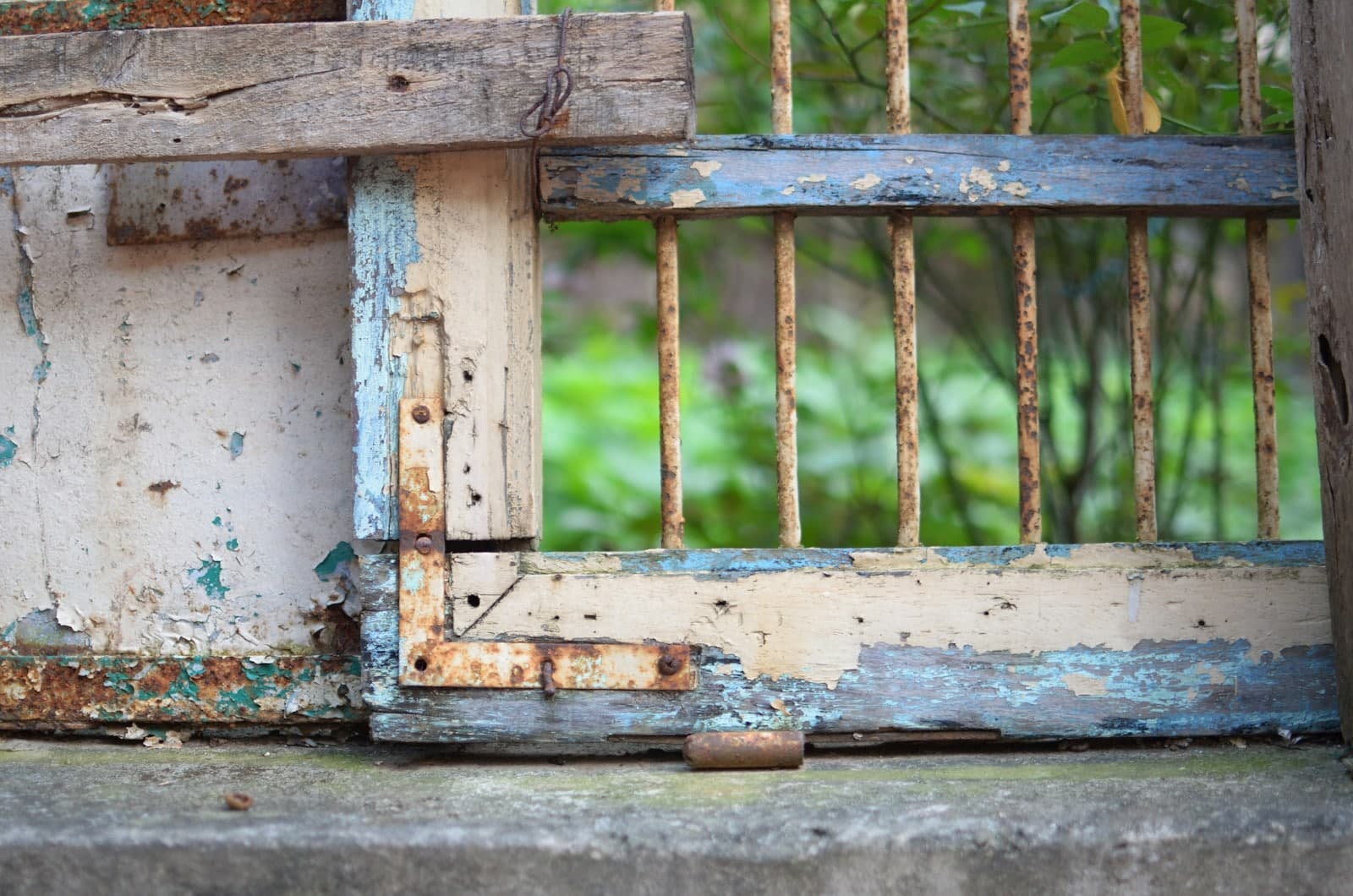
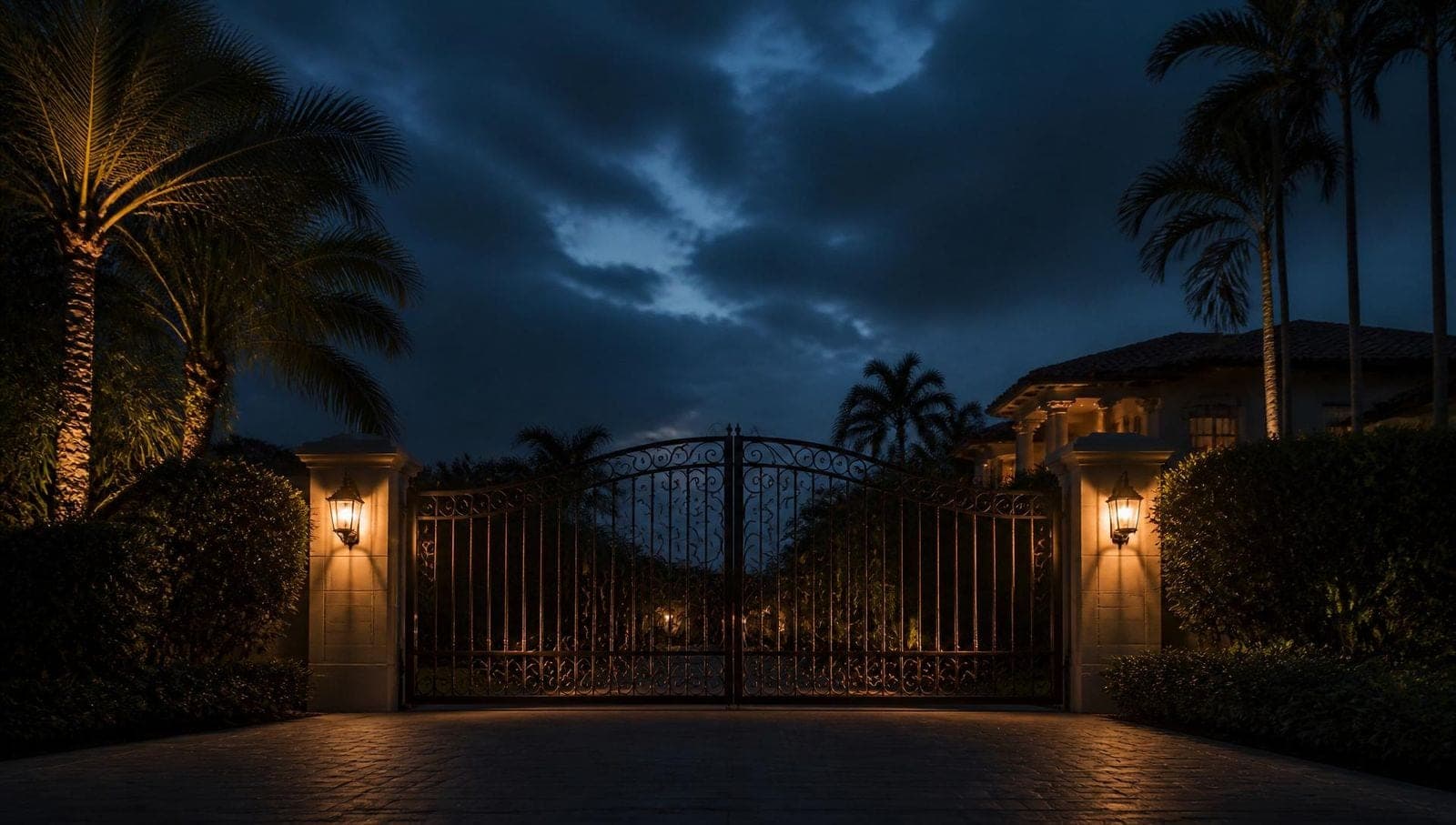
Ornamental iron is chosen for a look nothing else replicates, and needs a maintenance commitment to match: a proper coating system, attention to the scrollwork joints where water sits, and touching up damage when it appears. Owners who accept that get decades. Owners who do not get the gate in the photograph at the top of this page.