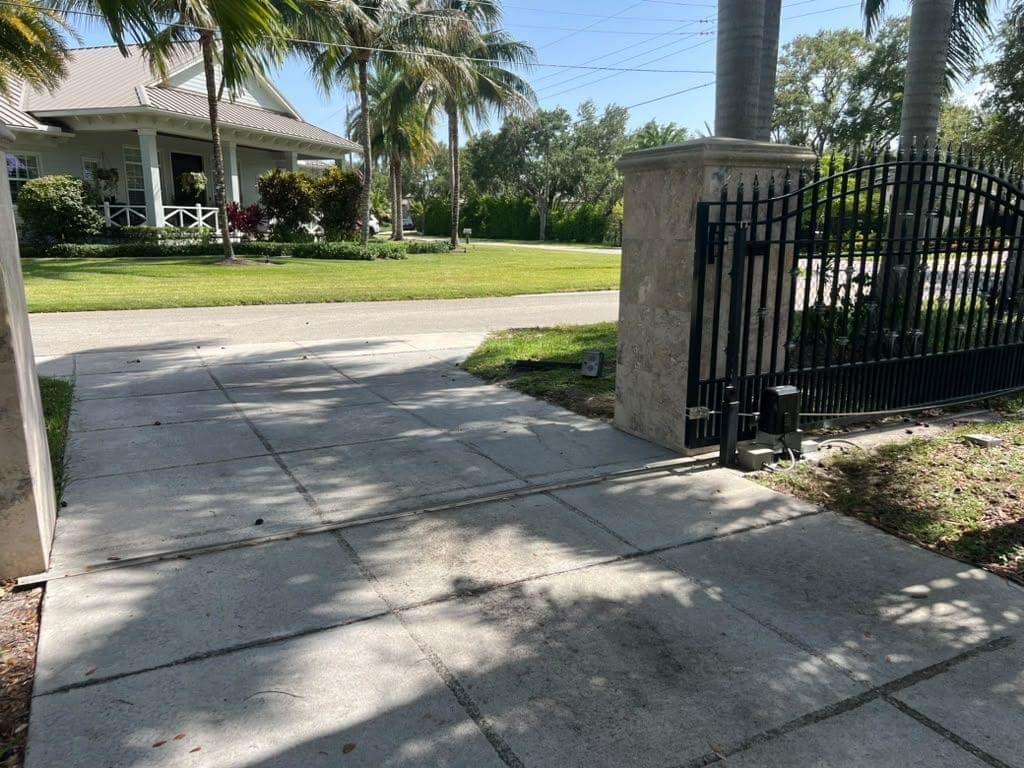
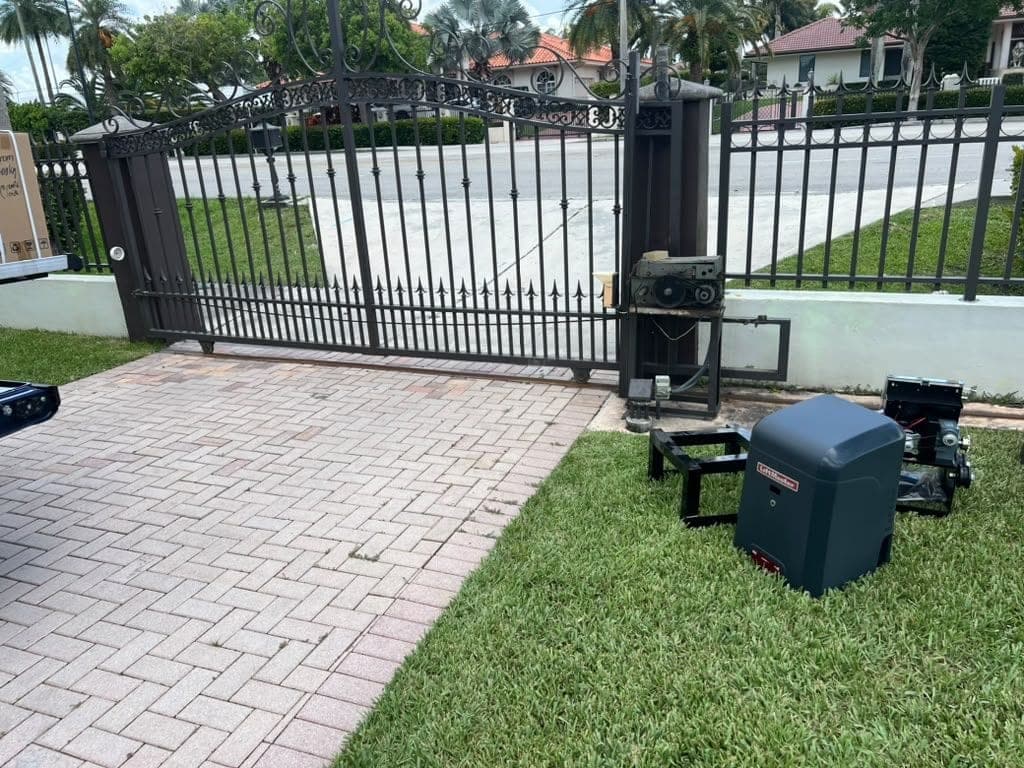
Technician working on an ornate iron gate at a residential entrance

Diagnosis · Automatic gates

A gate that opens two feet and quits is not broken at random. It is reporting a fault, and the order you check things in decides whether this is a ten-minute fix or a service call.

July 31, 2026Updated August 1, 20265 min read1,201 words

A gate that stops dead halfway feels like a catastrophic failure. It almost never is. The operator is doing what it was designed to do — it decided something was wrong and stopped rather than keep pushing. Your job is to work out what it thinks it saw.

The useful thing about a mid-travel stop is that it narrows the field immediately. A gate that does nothing at all is a power or signal problem. A gate that runs the full cycle but sounds terrible is mechanical wear. A gate that starts confidently and then quits, or starts and reverses, is almost always an entrapment protection device, a limit, or a force setting — three things, in that order.

Start on the ground, not at the motor

Before you open a single cover, walk the gate's path. On a slide gate, look along the track for a pebble, a lizard, a flattened irrigation head, grass crept over the rail. On a swing gate, look at the arc: a paver that has heaved a quarter inch, a hose reel, a root. South Florida driveways move, and a gate that stops at the same spot every time is usually meeting something new at that spot.

Check whether it stops at the same point each cycle or a different one. The same point every time means a physical obstruction, a bent track section, or a limit that has drifted. A different point each time means a sensor, a power problem, or a board that is browning out.

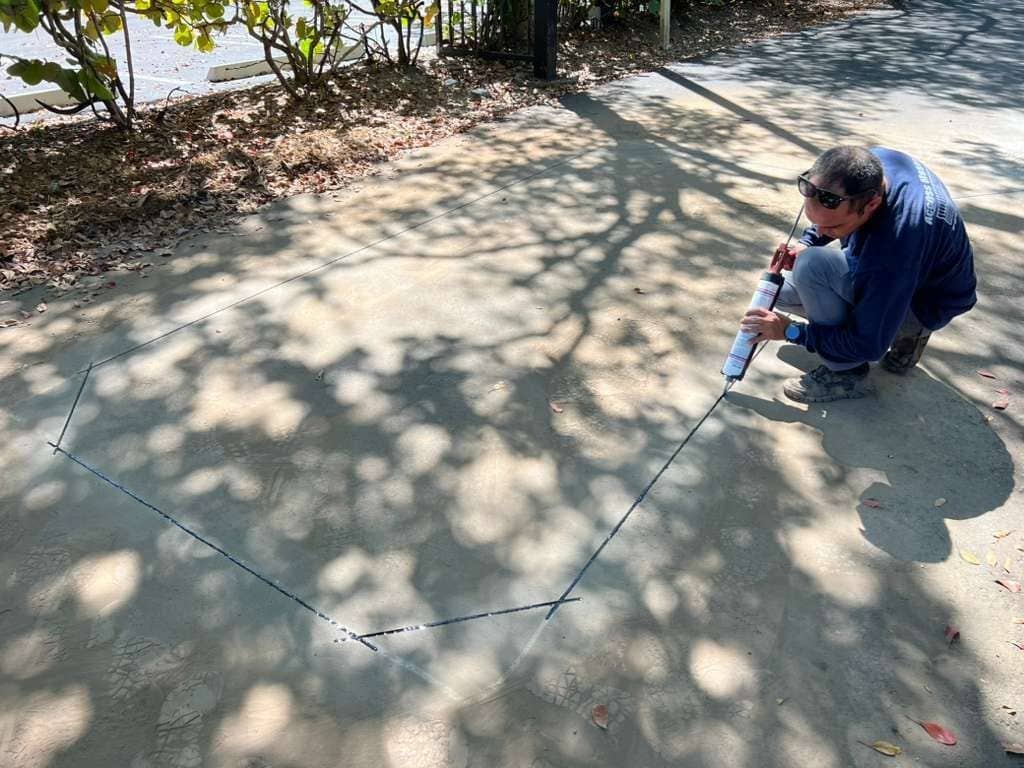
Photo eyes and safety loops

Every modern operator sold in the US is built to UL 325 (UL Standards & Engagement, opens in a new tab), which requires more than one independent means of protecting the places a gate can trap a person: photo eyes, a contact edge, and the operator's own force sensing. Any one of them can stop the gate — and a sensor that has drifted out of alignment cannot tell a child from a spider web.

  • Wipe both photo eye lenses. Salt haze, spider silk, lawn-clipping dust and lovebug residue all scatter the beam. This alone fixes a genuine share of "my gate is broken" calls.
  • Look at the LEDs. Nearly every photo eye has a status light: solid usually means aligned and clear, blinking or off usually means blocked or misaligned. Check the model's own legend before you conclude anything — the colours are not standardised across brands.
  • Check the post the eye is mounted to. A sprinkler that has been washing the base of a 4x4 for a year will move it enough to break a beam alignment measured in millimetres.
  • If the gate stops only when a car is sitting in a particular spot, suspect a safety loop in the driveway rather than the eyes.
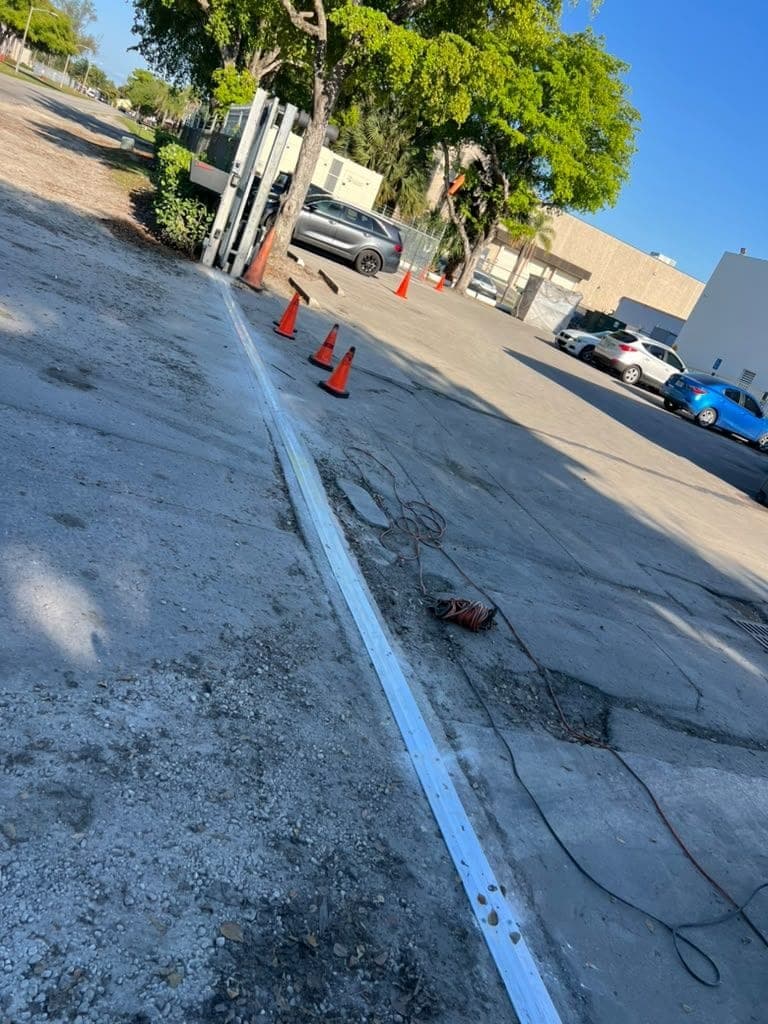
Technician sealing a finished underground safety loop cut in a driveway
A safety loop, cut in and sealed

Limits and force settings

Limits tell the operator where open and closed are. Depending on the machine they are magnets on a chain, cams on a rotating shaft, or a counted encoder value in the board. Magnets slide. Cams loosen. Encoders lose their reference after a power interruption. A limit that has drifted makes the gate stop short and think it has finished — which is why a gate that "stops halfway" sometimes stops halfway and then happily closes again on the next command.

Force sensitivity is the other half of that pair. The operator watches how hard it is working, and if the load jumps it assumes it has hit something and stops or reverses. That is exactly the behaviour you want. It also means anything that makes the gate physically harder to move — a dragging hinge, a flat-spotted roller, a warped leaf, a track full of grit — will trip the force limit long before it looks like a mechanical problem.

Power, batteries and the control board

Most residential operators here run a DC motor off a battery, with the transformer or the solar panel keeping the battery charged. That design is why your gate still works during an outage — and it is also why a failing battery produces such a specific symptom. A tired battery holds enough voltage to start the gate and collapses under load, so the gate lunges, slows and stops partway. If your gate has been stopping mid-travel more often since the last storm season, the battery is the first thing worth measuring.

Beyond that you are into the control board, and this is where the line sits. Boards in coastal installs live a hard life: humidity, salt, lightning-season surges, and ants — genuinely ants, which nest in warm enclosures and bridge contacts. Diagnosing a board means working in a cabinet that may still be live, with a battery capable of a serious short. That is not a homeowner job.

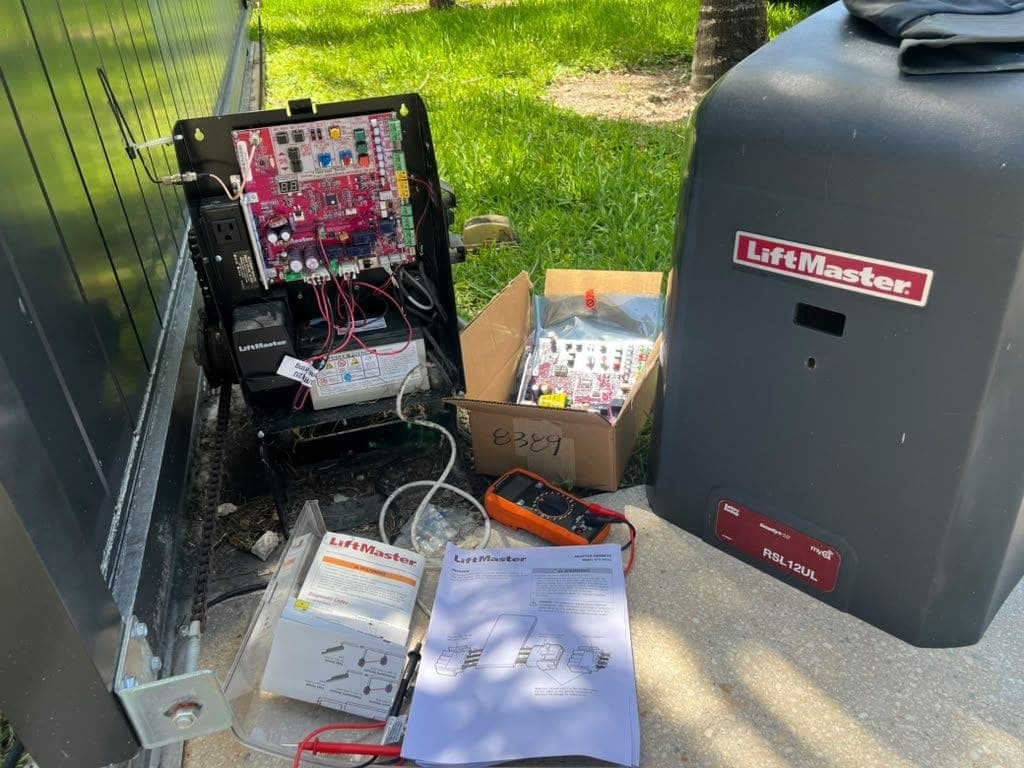
Open gate operator control box with the board out and test gear laid on the ground
Board out, meter on, on site

What is DIY, and what is not

Reasonable to do yourself

  • Clear the track, the arc and the hinge line.
  • Clean both photo eye lenses and check their status LEDs.
  • Look for an obvious mechanical obstruction or a shifted sensor post.
  • Note the pattern — same spot or random, one direction or both, worse when hot or wet.
  • Release the manual disconnect and move the gate by hand to feel for drag.

Call someone

  • Anything inside the control cabinet, live or not.
  • Force, limit or encoder reprogramming.
  • A gate that reverses with nothing in its path — that is a real fault, not a nuisance.
  • Sagging leaves, bent frames, worn hinge pins or a track that is out of level.
  • A gate that has moved on its own, drifted, or failed to hold position.

Moving the gate by hand after releasing the manual disconnect is the most useful five minutes you can spend. A healthy gate moves with steady, even effort. If it binds at the same spot the operator quits, or drifts closed on its own, you have found a mechanical fault the operator was only reporting. Fixing the drag fixes the stop.

If it is still stopping after the walk-round, the pattern you noted is worth more than any part. Tell whoever you call where it stops, in which direction, how often and what changed — a storm, a resurfaced driveway, new landscaping, a power cut. We cover Miami, Fort Lauderdale and the rest of the three counties for exactly this, and the diagnosis usually happens in the first few minutes on site. Tell us what it is doing and we will tell you what we would check first.

Sources

The bodies that publish the standards and rules named above. Every link goes to the organisation itself, so anything asserted here can be checked at the source rather than taken on our word.

Published by Local Gate Repairs on , last revised . Written by the business rather than by a named author — this site does not publish a byline it cannot stand behind. General guidance for South Florida properties: every gate, driveway and operator is different, and permitting is administered locally, so treat this as a starting point rather than a specification for your own entrance. What this site does and does not claim is set out in full on standards & sources.

Next step

It starts witha drawing.

On-site consults across South Florida. You see the gate on your own entrance before you commit to anything.

Call NowGet a Quote