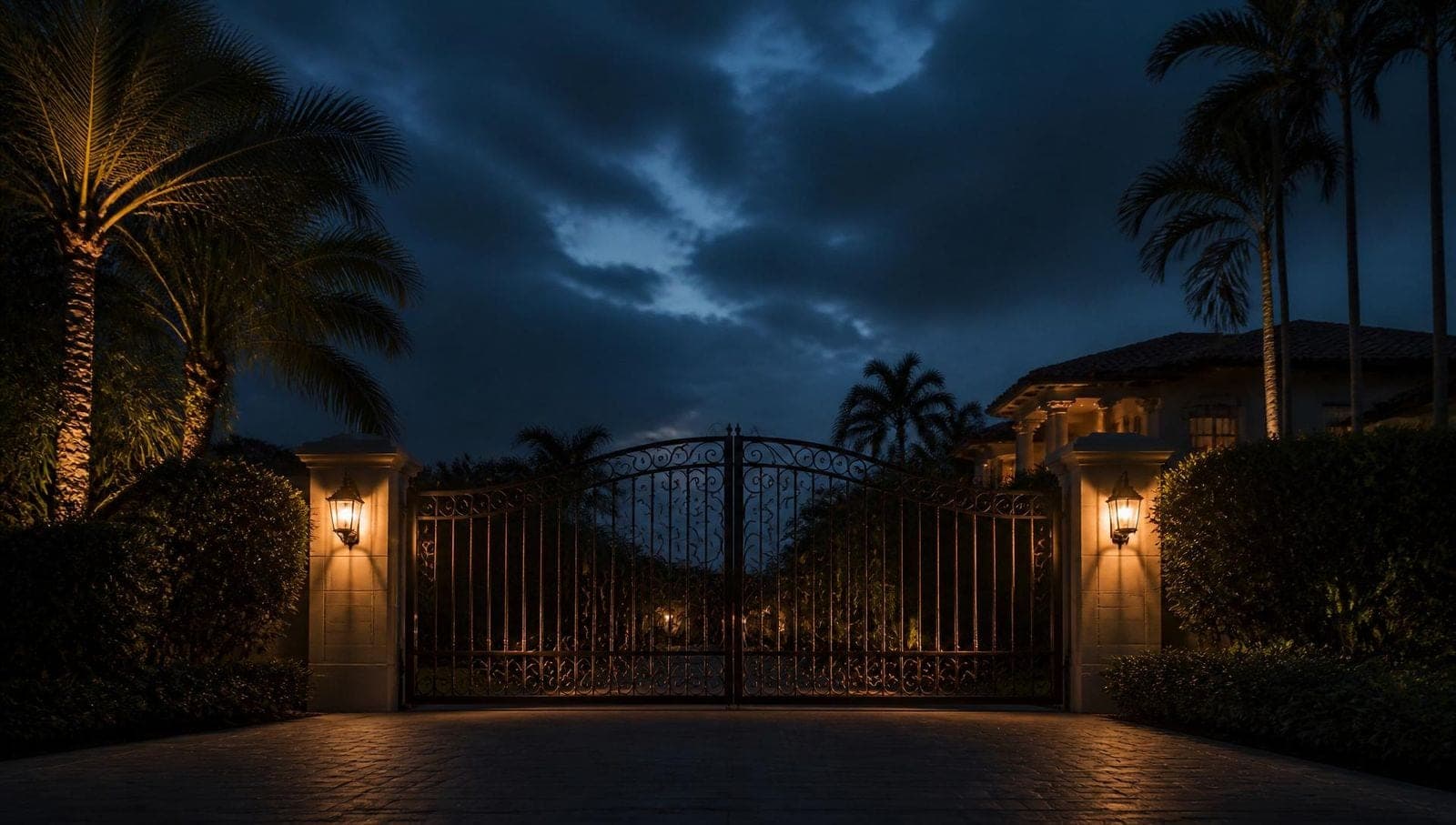
Black sliding driveway gate closed across a paved entrance

Code · Miami-Dade & Broward

Miami-Dade and Broward sit inside the strictest wind-design zone in the Florida Building Code. Palm Beach does not. Here is what that changes about a gate — and what it honestly does not.

July 31, 2026Updated August 1, 20265 min read1,094 words

The High-Velocity Hurricane Zone is a section of the Florida Building Code (International Code Council · Digital Codes, opens in a new tab) that applies to two counties: Miami-Dade and Broward. Palm Beach is outside it. That single fact is why an identical gate design can be a straightforward job in Boca Raton and a more involved one in Aventura twenty minutes down the road.

It also generates a lot of marketing noise. So it is worth separating the part that genuinely changes how a gate is built from the part that is a sticker on a brochure.

What the zone actually governs

HVHZ is a wind-design regime. It sets higher design wind speeds and stricter testing and approval requirements for building components, because these two counties take the worst of the Atlantic hurricane track. For windows, doors, shutters and roofing, that translates into product approval — a tested assembly with a Miami-Dade Notice of Acceptance (Miami-Dade County · Regulatory & Economic Resources, opens in a new tab) or a Florida Product Approval (Florida Building Commission, opens in a new tab) number, installed exactly as the approval describes. Both registers are public and searchable, so a claimed approval can be checked rather than taken on trust.

A driveway gate is generally not one of those tested product categories. There is usually no NOA sticker to look for on a custom gate, and anybody implying their gate carries one is worth a second question. What HVHZ changes for a gate is the engineering underneath it: the wind load the gate and its posts have to survive, and whether the local building department wants that demonstrated on a permit.

Infill is the decision that costs the most

Wind load on a gate is, to a first approximation, pressure multiplied by the area the wind cannot pass through. That makes infill the single most consequential design choice on the whole gate, and it is usually made on aesthetics alone.

  • An open picket or scroll gate lets most of the air through. The load on the frame and posts is modest, and the design conversation stays about style.
  • A solid-clad gate — flat panel, tight louvres, timber boards, composite — is close to a full sail. The same opening, the same style, an order of magnitude more force into the posts.
  • Angled louvres sit in between and are the usual compromise when you want privacy without building a wall. How much they actually relieve depends entirely on the angle and spacing.

None of this makes a solid gate a bad idea. It makes it a gate that has to be engineered as one: bigger post sections, deeper footings, heavier hinges and a frame that will not oil-can. The failure mode we see is a solid gate hung on hardware specified for an open one — it survives ordinary weather perfectly well and finds out the truth in a single storm.

Torch cutting through steel box section on a bench with sparks pouring off
Frame section is a structural choice

Posts and footings do the real work

Gates rarely fail in the middle of the leaf. They fail where the load is concentrated: at the hinge post, at the roller post on a cantilever, and at the footing under both. That is the part of the job that is invisible the day after it is finished and decisive ten years later.

Two things about South Florida ground matter here. First, much of the region sits on limestone with a shallow, aggressive water table, so footing design is a real question rather than a default hole depth. Second, that same water table means anything embedded is in wet, mineral-rich ground for its whole life — which is a corrosion question as much as a structural one, and the reason the material choice at the base of a post deserves as much thought as the gate on top of it.

If a gate is being attached to an existing masonry pillar, the pillar becomes part of the structure. Decorative pillars built for a light ornamental gate are routinely asked to carry a heavy solid one, and stucco hides everything about what is inside until it cracks at the anchor.


Operators, power and the storm itself

Wind is only half of hurricane season. The other half is the power going out, and a gate you cannot open is a gate that has trapped your cars in.

  • Battery backup on a DC operator is standard practice here for exactly this reason. It is the difference between a storm being an inconvenience and being a problem.
  • Know where the manual release is, and try it before you need it. A disconnect that has never been operated is a disconnect nobody can find in the dark.
  • Surge is the quiet destroyer. Lightning does not have to hit the gate — a nearby strike on the utility line will happily take out a control board through the transformer.
  • After a storm, expect water ingress. Cabinets get driven rain from angles they never normally see.
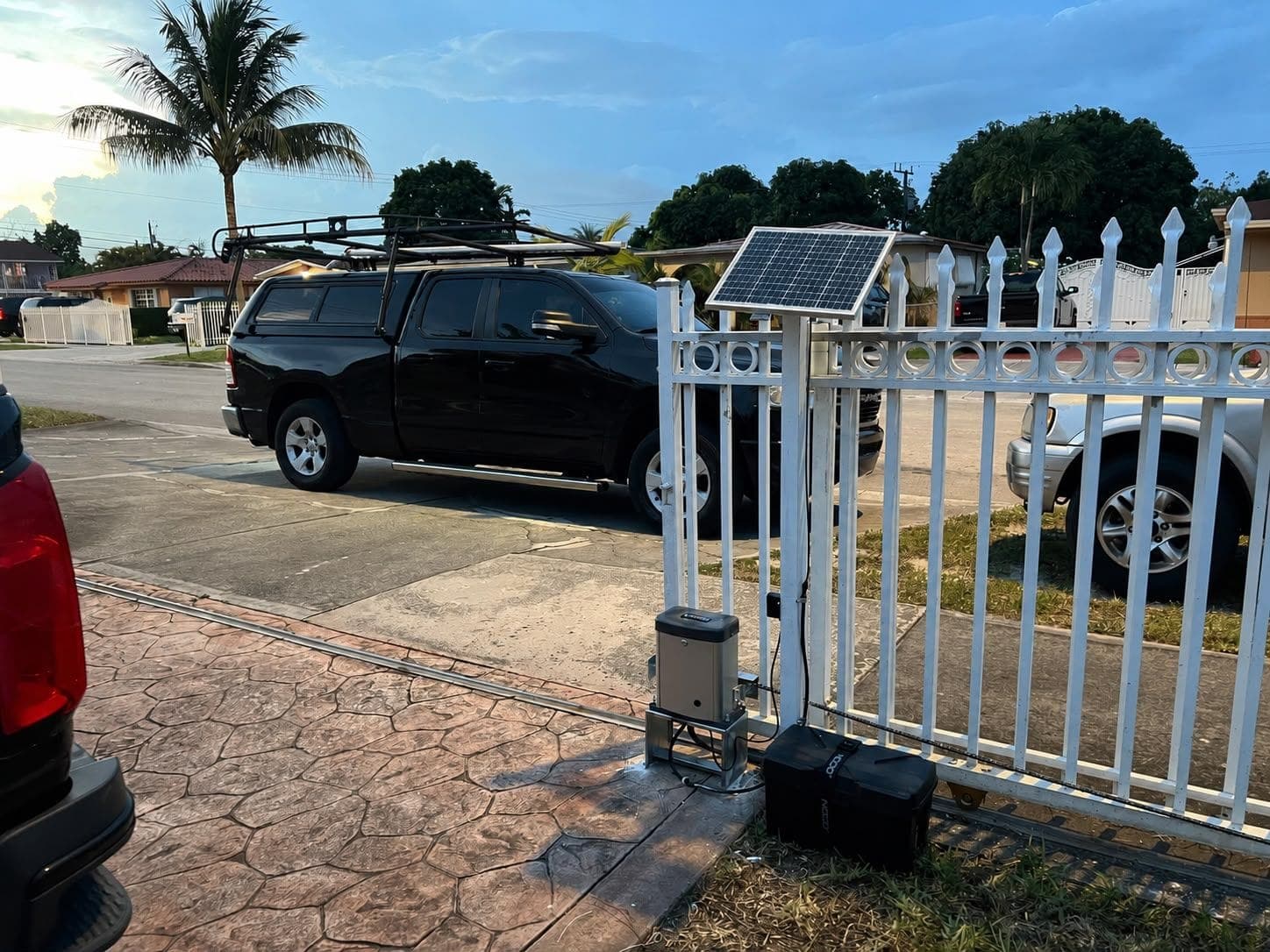
Solar panel mounted above a white aluminum gate powering its operator
Solar and battery, off the grid

And in Palm Beach?

Palm Beach County is outside the HVHZ, which means the approval and testing regime is different — not that the wind is. A gate in Jupiter or Palm Beach on an exposed coastal lot faces weather that would not embarrass Miami, and the sensible design brief is the same one: know the infill area, size the posts and footings for it, and do not let the gate be stronger than what it is bolted to.

The genuinely useful takeaway is that "hurricane rated" is not a meaningful claim about a custom gate. What is meaningful is a design that names its infill area, its post section, its footing and its hardware, and a permit conversation with the department that governs your street. If you want to walk through that for a specific entrance, start here — and if you already have a gate that has been through a season or two, the post-storm inspection list is the cheaper thing to read first.

Sources

The bodies that publish the standards and rules named above. Every link goes to the organisation itself, so anything asserted here can be checked at the source rather than taken on our word.

Published by Local Gate Repairs on , last revised . Written by the business rather than by a named author — this site does not publish a byline it cannot stand behind. General guidance for South Florida properties: every gate, driveway and operator is different, and permitting is administered locally, so treat this as a starting point rather than a specification for your own entrance. What this site does and does not claim is set out in full on standards & sources.

Next step

It starts witha drawing.

On-site consults across South Florida. You see the gate on your own entrance before you commit to anything.

Call NowGet a Quote