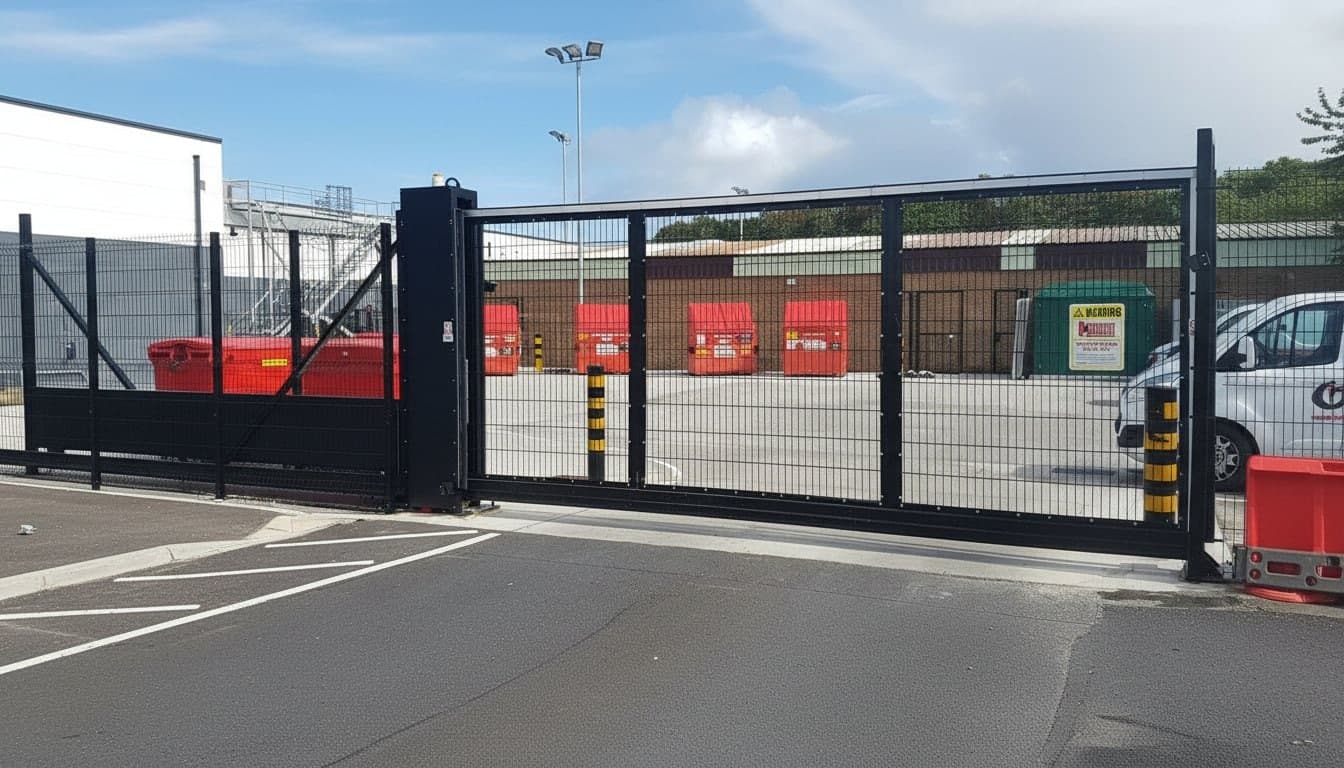

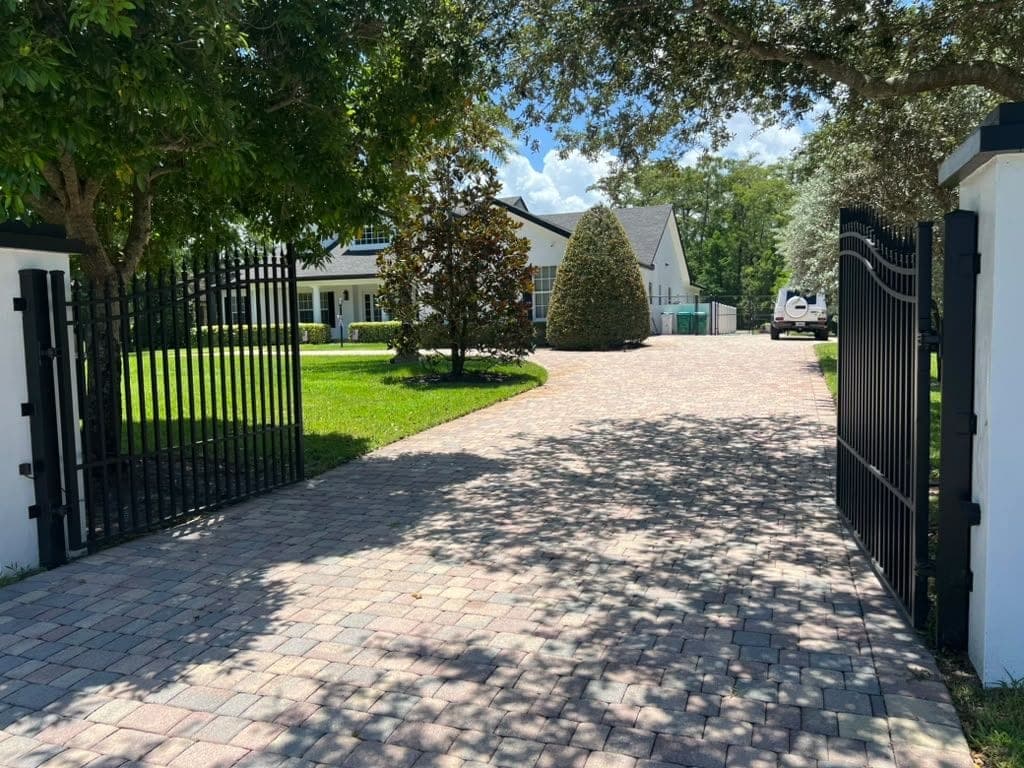
Ornate black iron double gate hung between brick pillars with the drive visible through the bars

Design · Infill

Open pickets and solid panels are not two styles of the same product. They behave differently in wind, they cost differently to automate, and they change what you can see coming — which is the part most people decide last and regret first.

July 31, 20266 min read1,264 words

The infill — the part between the frame members — is usually chosen from a photograph, and it is the single decision that changes the most about a gate. It sets how much of the property is visible from the street, how much wind the leaf catches, how much the leaf weighs, and therefore what machine has to move it. Three quite different questions hide inside what looks like a matter of taste.

  1. What can you see out? Standing at the gate waiting for it to open, do you know what is on the other side?
  2. What can be seen in? And is that concealment protecting you, or protecting somebody standing behind it?
  3. What does the air do? A solid leaf is a sail. An open one is not.

The case for open

Ornamental infill — vertical pickets, iron bars, scrollwork panels — is the traditional answer, and it has practical arguments behind it that have nothing to do with looking like an estate.

  • You can see through it. From the driver's seat you can see whether anything is in the way before the gate finishes opening, and from the house you can see who is at the entrance.
  • So can everyone else, which is the security argument people find counter-intuitive: an open gate leaves nowhere to stand unseen, and the property stays visible to neighbours and passing patrols.
  • Wind passes through it. That means smaller loads on posts and footings, and a design that is far easier to satisfy under the hurricane-zone rules.
  • It is lighter, which means a smaller operator, less strain on hinges and rollers, and a gate that is easier to move by hand in an outage.
  • It shows the house. If the architecture is the point, a solid gate erases it from the street.

The obvious cost is that everything is on display: the cars, the boat, the bins, the equipment down the side of the house. Ornamental work also carries a maintenance commitment, because every scroll and picket junction is somewhere water sits — the detail on that is in salt air and gate hardware.

Gilded ornamental ironwork and crest detail across the top rail of a tall gate
Ornament is a look, a cost and a water trap at once

The case for solid

Privacy infill is not only about privacy. It screens the parts of a property nobody designs to be looked at, it cuts the visual noise of a busy road, and on a modern house a flat plane of aligned material is the architecture rather than a compromise with it.

The costs are structural and they are real. A solid leaf presents its whole area to the wind, and that load runs into the posts and the footings as an overturning moment — which is why a solid gate on an exposed lot is a different job from the same gate behind a mature hedge. It is heavier, so the operator class steps up. And the concealment cuts both ways: a solid gate is something a person can stand behind, and it removes your ability to see out before you commit to opening it.

The middle ground, which is where most people end up

The choice is not binary, and the interesting designs live between the two. All of these give real screening without building a solid wall:

  • Horizontal slats with a calculated gap. Straight on you see very little; the gaps still bleed pressure rather than holding the full load. The gap is a number worth choosing deliberately rather than accepting as a default.
  • Angled louvers. Set the blade angle so the gate reads solid from the street and open from the house side — the most controllable version of this trade, and the most flattering in low sun.
  • Board-on-board, offset front and back. Visually solid from straight on, open on the diagonal, and it looks substantial because it is.
  • Perforated or expanded metal panels. Real screening, meaningful open area, and a modern look that suits a flat-fronted house.
  • Open pickets with planting behind. The cheapest privacy on this list by a distance, and it puts zero extra load on the gate. A hedge two feet behind an ornamental gate does what a solid leaf does, without the sail.
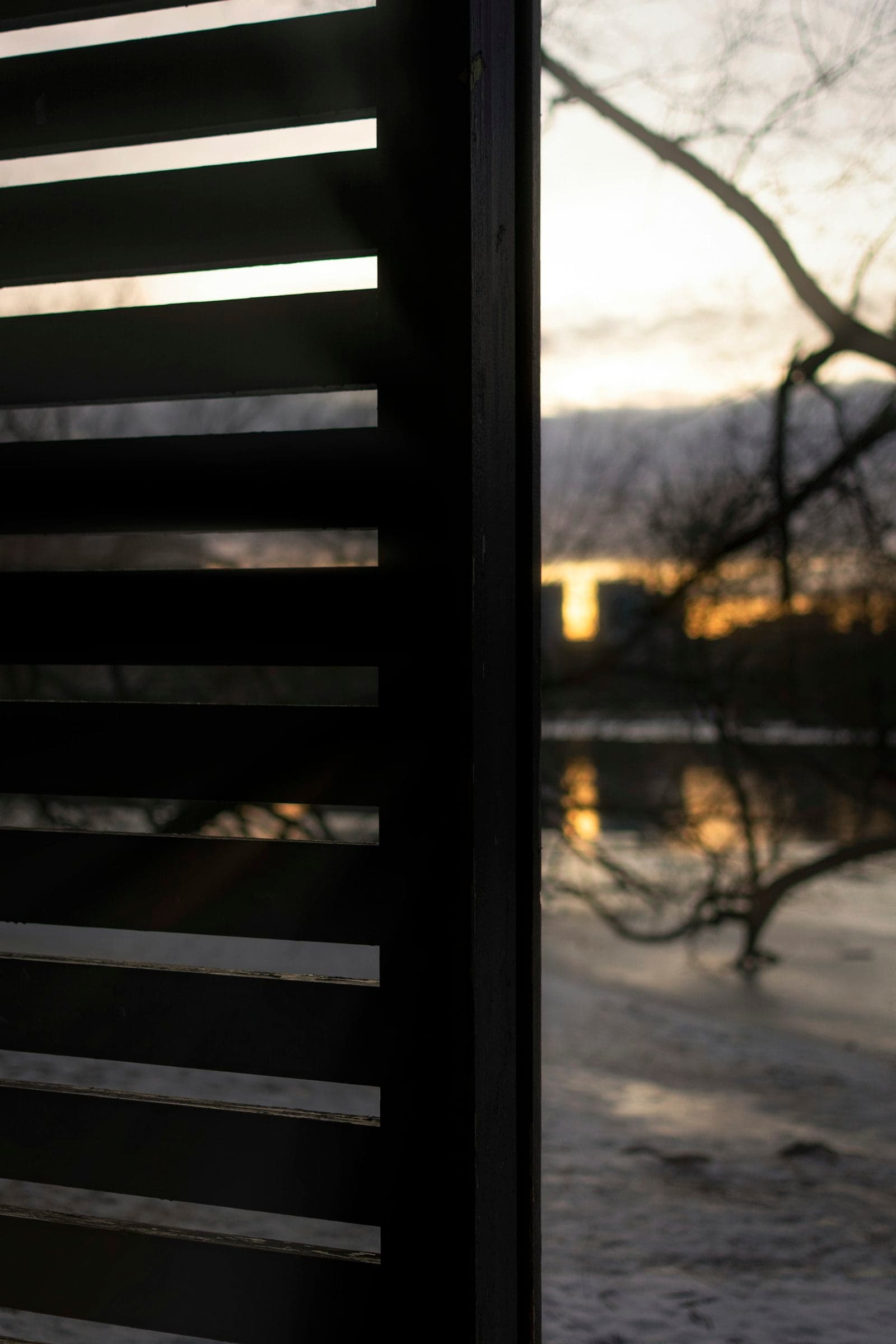
Backlit horizontal slat gate at dusk with light showing through the gaps between boards
The gap between slats is the whole design decision

What the infill drags along behind it

Once the infill is chosen, three other lines on the specification move with it, and they are the reason two visually similar gates can be priced very differently.

Open ornamental

  • Low wind load — modest posts and footings.
  • Lighter leaf, so a smaller operator and less hinge wear.
  • Sightlines both directions, day and night.
  • Maintenance concentrated at joints and scrollwork.
  • Nothing on the property is screened.

Solid privacy

  • Full wind load on the whole area — bigger posts, deeper footings.
  • Heavier leaf, larger operator class, more load on every moving part.
  • No view out, and cover for anyone standing behind it.
  • Flat surfaces show dents, and collect road film and debris.
  • Complete screening, which for some properties is the entire point.

Weight and area also decide the operator, which is why a design change late in a project can quietly move the machine into a higher class. The rest of that arithmetic is in what drives the cost of a driveway gate.

How each one ages

Ornamental work ages visibly and locally: a chip here, a rust weep at a collar there, all of it touchable up if it is caught. Solid panels age all at once and less forgivingly — a dent in a flat surface is permanent, horizontal slats collect leaf litter and road grime along every top edge, and a large uninterrupted plane shows fade sooner than a set of thin pickets does. Dark colours make both effects more obvious.

Neither of those is a reason to avoid a type. They are reasons to be honest with yourself about which kind of ageing you are willing to look at for the next fifteen years.

Deciding

  • Busy road, exposed corner lot, or nothing much to hide: open, and let the wind through.
  • Something specific to screen — a work yard, a boat, a pool visible from the street: slats or louvers before a full solid panel.
  • Modern house where the gate is meant to read as a plane: solid, with the posts and footings engineered for it rather than assumed.
  • Undecided: open pickets plus planting behind. It is reversible, it is cheap, and it is the only option on this list you can change your mind about.

Infill patterns are made, not picked off a page — slat spacing, louver angle and panel proportion are all things we set to the opening and the house. We design and fabricate across Coral Gables, Boca Raton, Parkland and the rest of the coverage area. Send a photo of the house from the street — the right infill is usually already visible in it.

Published by Local Gate Repairs on . Written by the business rather than by a named author — this site does not publish a byline it cannot stand behind. General guidance for South Florida properties: every gate, driveway and operator is different, and permitting is administered locally, so treat this as a starting point rather than a specification for your own entrance. What this site does and does not claim is set out in full on standards & sources.

Next step

It starts witha drawing.

On-site consults across South Florida. You see the gate on your own entrance before you commit to anything.

Call NowGet a Quote