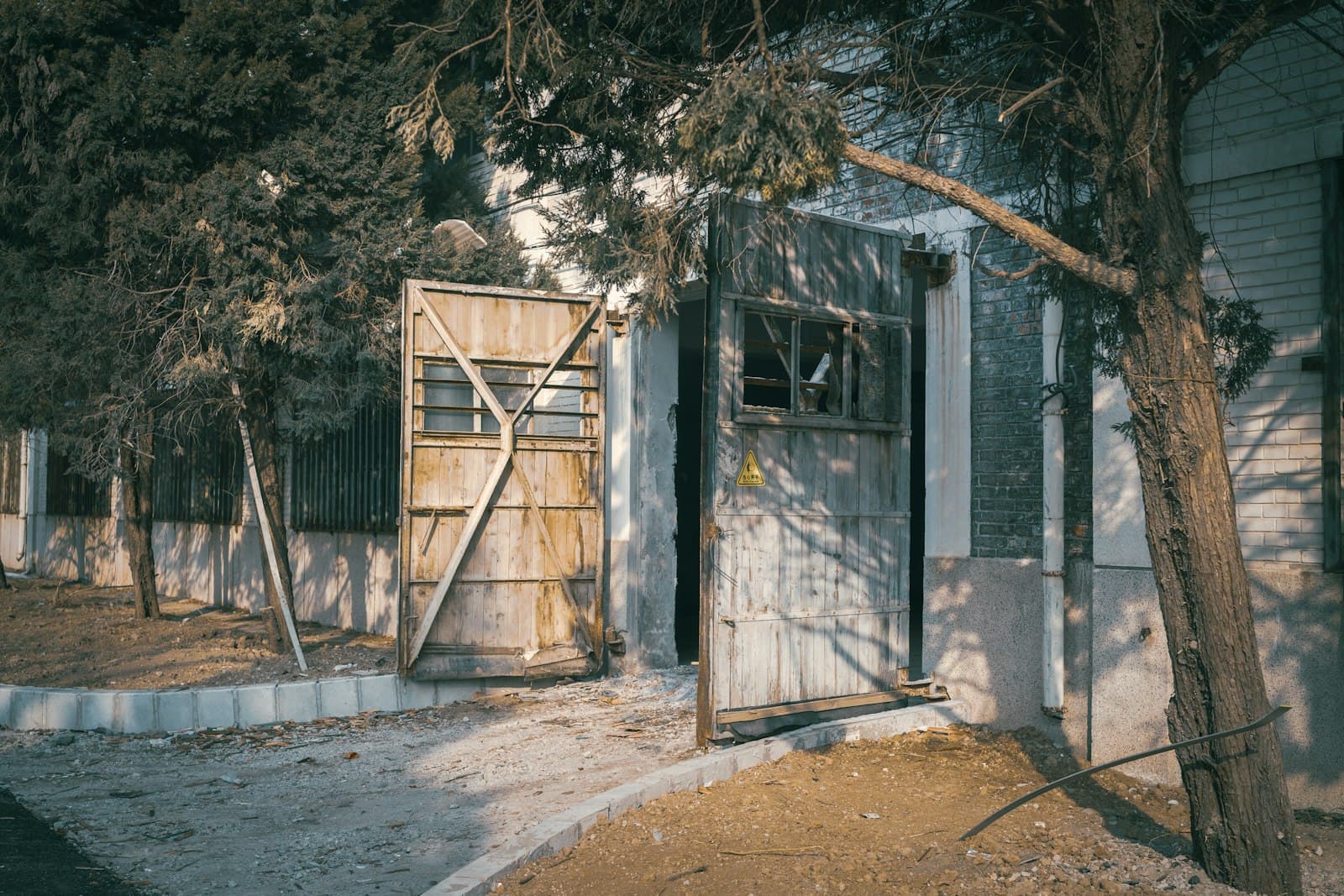
Old iron and timber side gate hanging out of square beside a house

Ownership · Decisions

A gate is three separate assets bolted together, each with its own lifespan and its own point of no return. Treating it as one item is why owners either replace something repairable or keep repairing something finished.

July 31, 20266 min read1,294 words

"Should I fix it or replace it" is asked as one question and cannot be answered as one, because what stands at the end of your driveway is three things with three clocks: a structure, a foundation and a machine. They fail independently, and the common expensive mistake is assuming that because one is finished the others must be too.

No prices here, for the same reason the cost article has none — instead, the tests that decide which side of the line each of the three parts sits on, so a recommendation can be checked rather than trusted.

Three assets, three clocks

  • The leaf. Frame, infill and hardware. In this climate its life is set by its coating system and its distance from salt water — decades if specified well, a handful of years if not.
  • The posts and footings. Either they are sound and outlast everything above them, or they have moved, in which case nothing bolted to them can be made to work properly.
  • The operator and controls. Wearing parts and electronics — the only one of the three with a manufacturer who can stop supporting it.

Assess them separately. It is entirely normal to find a twenty-year-old ornamental leaf worth restoring, on perfect posts, driven by a machine that should have gone five years ago. The right answer there is one new operator, not a new entrance.

The frame: what is repairable and what is not

Steel is extraordinarily repairable. A cracked weld can be ground out and re-run, a corroded bottom rail cut out and a new section let in, a dropped leaf pulled back into square. On-site welding solves a great deal of what looks terminal from ten feet away.

What is not economically repairable is corrosion that has reached the joints and the load path. Once members are thin where they meet, you are rebuilding a frame while paying to keep the parts that are still failing. The test is where the rust is, not how much.

  • Perforation from inside a hollow section: the frame was holding water, so the damage is everywhere the eye cannot see, not only where it broke through.
  • Aluminium chalking and swelling around every fastener: galvanic corrosion from the wrong hardware, and it continues wherever they were used.
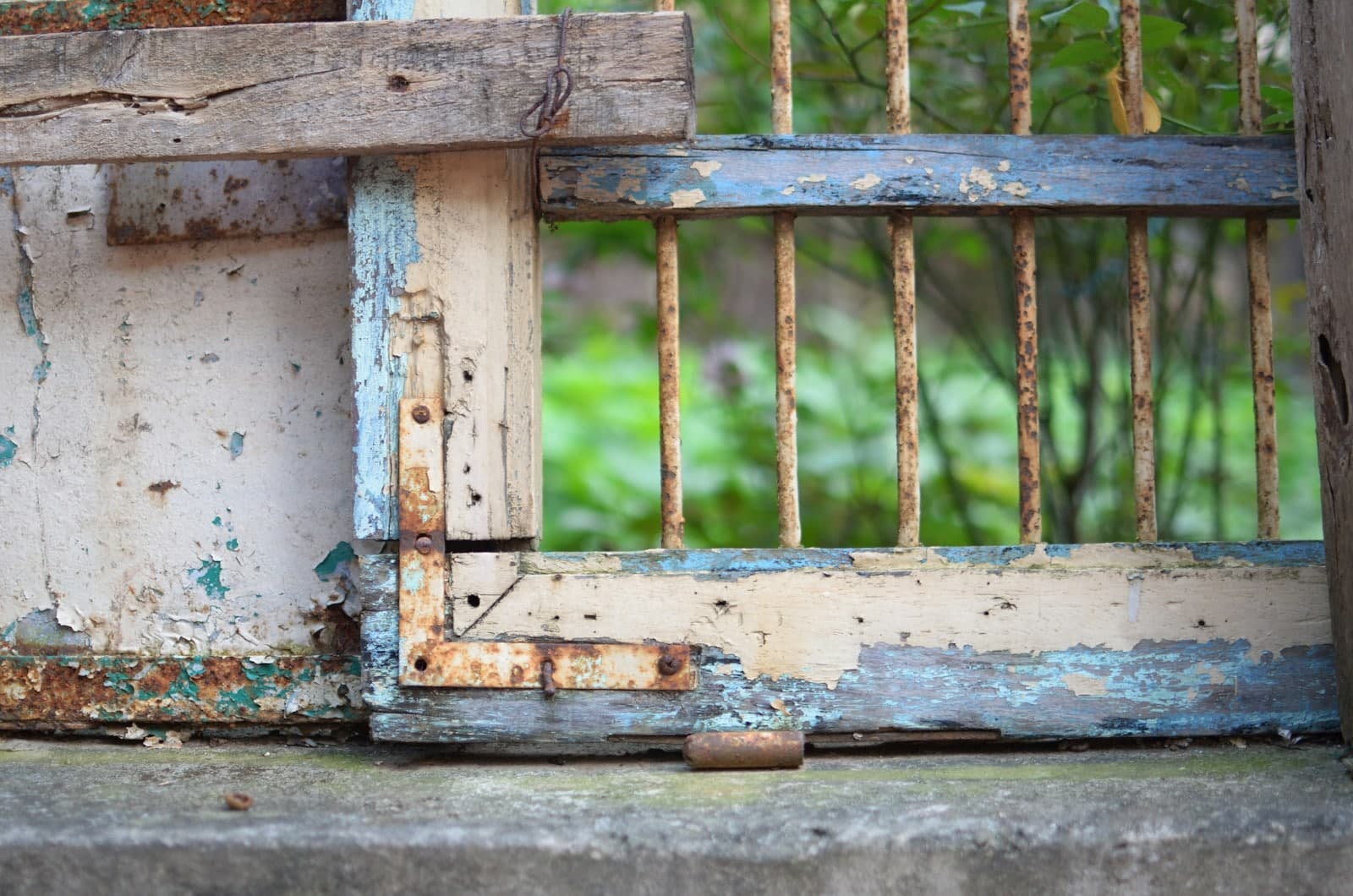
Rusted-through metal gate panel with peeling paint and a broken bottom rail
Past the point where a repair is the cheaper option

Posts and footings: the one nobody inspects

This decides more replace-versus-repair questions than anything else, and almost nobody looks at it. A gate is a lever, the footing takes that leverage, and when it starts to move the symptoms appear everywhere except at the post.

Look for a hinge post no longer plumb, a gap between leaves that has changed shape, a gate that latches in the morning and not the afternoon, or cracking radiating from a post base. Those are foundation symptoms routinely blamed on hinges.

  • A footing undersized for its gate does not settle once and stop. It keeps going, and every adjustment above it is temporary.
  • Masonry pillars are the recurring problem. A decorative pillar built for a light gate and later asked to carry a heavy solid one will fail, and stucco hides how it was built until it is opened up.
  • If the posts come out, the driveway gets cut — and most of the disruption of a full replacement has then already been triggered.

The operator: parts availability is the real clock

Mechanically, operators are simple and long-lived. Motors, gearboxes and drive components are serviceable. What ends an operator's life is almost never the motor.

It is the control board. Boards die from lightning, moisture and corroded low-voltage connections, and when a manufacturer discontinues a line the board goes unobtainable first. A machine whose board is no longer made has one failure left in it, however well the rest runs — the clearest replacement trigger in the whole assessment, and worth asking about before you authorise a repair.

  • Repeat repairs for one symptom. Two or three visits for the same fault usually means the machine is the fault, not the part being changed.
  • An operator undersized from day one. If it has run at the edge of its rating for years, replacing components inside it resets a clock running too fast.
  • Safety devices that cannot be brought to current standard. Some older controls cannot supervise monitored devices at all, and a gate that cannot be made safe is not worth investing in — see what the standards ask for.
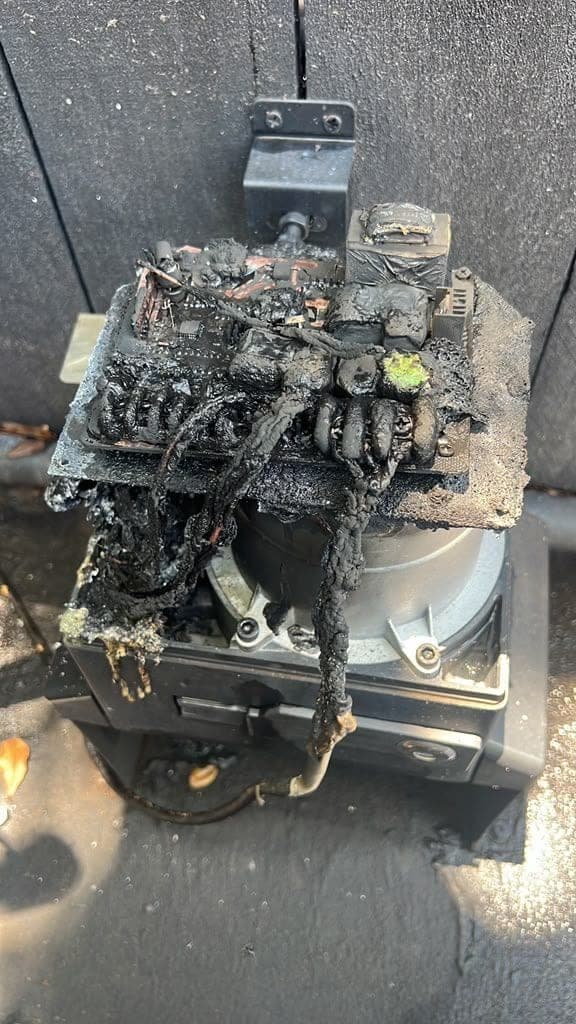
Gate operator burned out and caked in corrosion after years of coastal salt
The end of an operator, and it was not the motor

Which way the evidence usually points

Repair is the rational choice when

  • One identifiable component has failed and the rest is sound.
  • Corrosion is on faces, not at the joints.
  • Posts are plumb, footings sound, geometry unchanged.
  • Parts are still available and the board is supported.
  • The safety devices can be brought fully to standard.

Replacement is the rational choice when

  • The frame is perforated at the load path or re-squared repeatedly.
  • A footing has moved, or a pillar carries a load it was never built for.
  • The control board is discontinued with no compatible replacement.
  • The operator was undersized from the start for the leaf it drives.
  • The gate cannot be made compliant with current safety requirements.

The middle paths most owners never get offered

  1. Keep the leaf, replace the machine. Common with ornamental gates worth keeping: an operator sized for the actual leaf weight, with current safety devices, transforms the entrance without touching the part you liked.
  2. Keep the machine, rebuild the leaf, where a sound operator drives a frame that has corroded out. The new leaf must be built to a weight the existing operator is rated for — a design constraint, not an afterthought.
  3. Keep the posts, change everything else. Reusing sound footings removes the excavation, the cutting and the reinstatement — the most disruptive part of a replacement. Only works if somebody verified them.

A fourth path is staging: replace the safety-critical operator and devices now, plan the leaf for next year. Legitimate, provided the sequence does not mean paying for the same access twice.

Questions to ask before agreeing to either

  1. Which of the three — leaf, footings, operator — has failed, and how do you know?
  2. Is the control board still available, and is the model line still supported?
  3. Are the posts plumb and the footings sound — and what did you actually check?
  4. What caused it, and does the proposed work address the cause or the symptom?
  5. Can this gate be brought fully to current safety standard as it stands?

An assessment that cannot answer those is a guess. The most expensive outcome here is neither repairing nor replacing — it is a run of individually reasonable repairs on a gate that was finished two years ago. Somebody has to look at all three assets at once and say so plainly, in Miami, Boca Raton, Davie and anywhere on the coverage list. Tell us what it is doing and how long it has been doing it, and the conversation starts from the gate rather than from a catalogue.

Published by Local Gate Repairs on . Written by the business rather than by a named author — this site does not publish a byline it cannot stand behind. General guidance for South Florida properties: every gate, driveway and operator is different, and permitting is administered locally, so treat this as a starting point rather than a specification for your own entrance. What this site does and does not claim is set out in full on standards & sources.

Next step

It starts witha drawing.

On-site consults across South Florida. You see the gate on your own entrance before you commit to anything.

Call NowGet a Quote