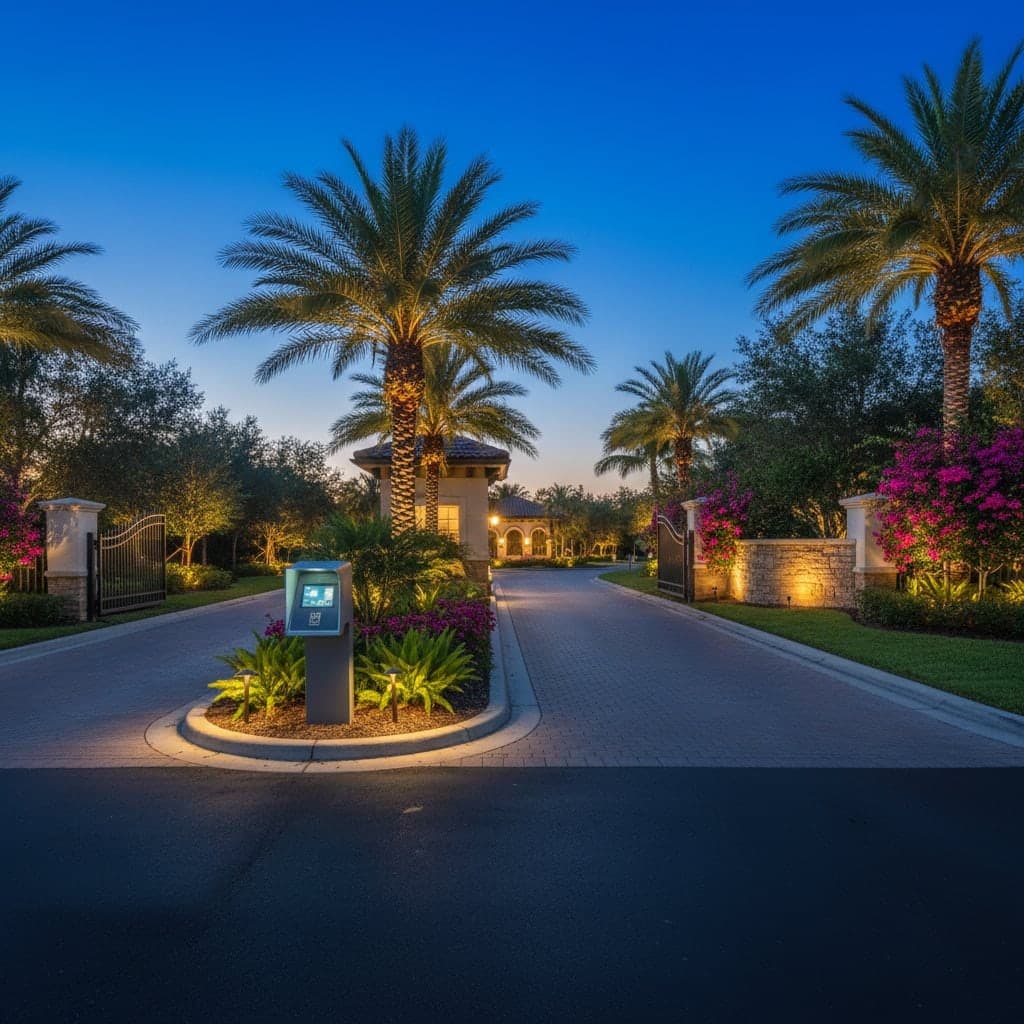
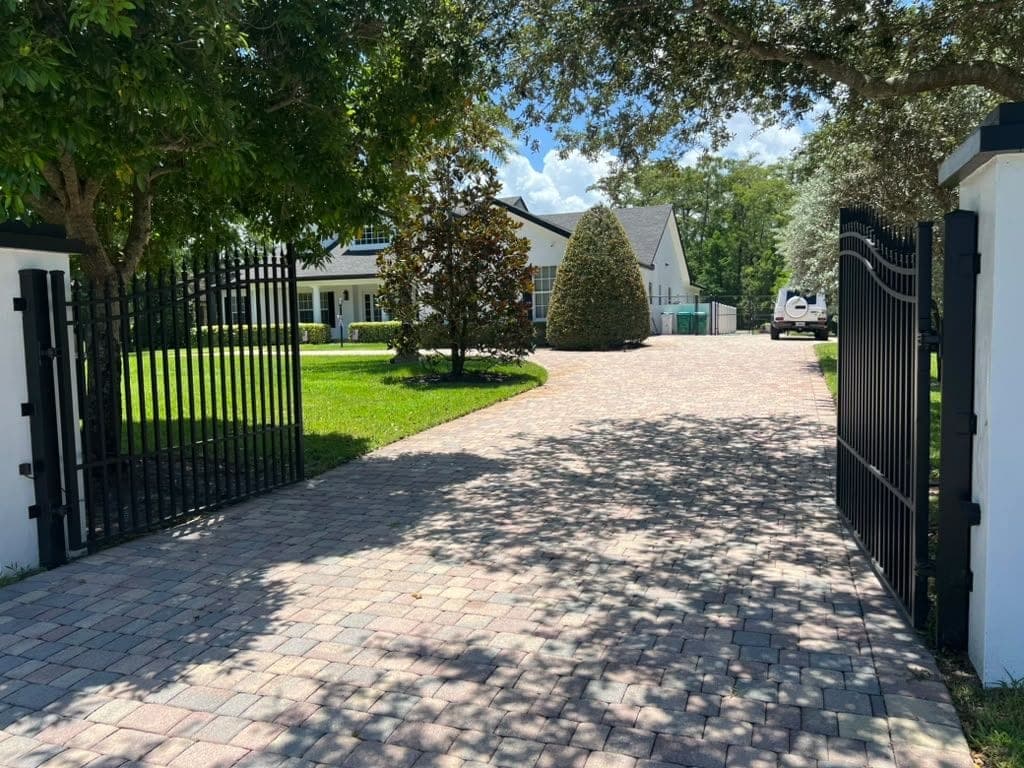
Landscaped community entrance island with an access pedestal at dusk

Planning · Approvals

Architectural review is where gate projects quietly lose months. Nearly always it is because the submittal was assembled after the design instead of before it. Here is how the process generally runs in a Florida community, and how to sequence a project around it.

July 31, 2026Updated August 1, 20266 min read1,294 words

A gate project inside a deed-restricted community has an extra gatekeeper, and it is not the city. It is a committee of your neighbours working from a document most owners have not opened since closing. That committee is rarely unreasonable — it is just literal, and literal is easy to satisfy if you read the same document they are reading before you fall in love with a design.

Everything below is how architectural review generally works in Florida communities. It is not legal advice and it is not a description of yours, because every association is governed by its own recorded declaration and guidelines. Those documents win every argument.

Association approval and a permit are not the same thing

This is the misunderstanding that wastes the most time. They are two tracks with two authorities, two sets of criteria, and no obligation to agree with each other.

HOA architectural review

  • A private, contractual process created by the recorded declaration you agreed to when you bought.
  • Cares about appearance, consistency, height, colour, style and how the entrance reads from the street.
  • Run by a committee or a board, often meeting on a fixed cycle rather than on demand.
  • Approval is about whether the community will accept the look of it.

Municipal permitting

You can have one without the other and be stuck. A design your committee loves can still fail on wind pressure or a corner sight triangle. A perfectly permittable gate can still be rejected because the pickets are the wrong profile. Both have to land, and it is far cheaper to find the conflict on paper.

Find the documents before you find a design

Ask the association or its management company for the current architectural guidelines and the relevant sections of the declaration, and read them before anybody draws anything. Communities that care about entrances have usually written down exactly what they want, in language more specific than owners expect.

  • Maximum height, and whether it is measured at the post, at the top of the leaf, or including finials.
  • Permitted materials, and sometimes explicitly prohibited ones.
  • Colour, often restricted to a named palette or to "matching existing".
  • Whether solid or privacy infill is allowed at all — many communities require a percentage of open area so the streetscape stays visible.
  • Setback from the property line or from the sidewalk, which frequently interacts with where a swing gate can legally open to.

What a submittal usually contains

Requirements vary, but the shape of a complete application is consistent. A committee is trying to picture the finished thing from the street, and the applications that sail through make that easy.

  1. The association's own application form, completed — not a letter instead of it.
  2. A drawing of the gate with dimensions: overall width, height, post size and picket or slat spacing.
  3. A site plan or survey showing where it goes, the setback, and which way it opens or slides.
  4. Materials and finish specified by name — the metal, the coating system and the colour, ideally with a physical sample or a manufacturer's colour reference rather than a screen colour.
  5. An elevation or rendering showing the gate in place, which is the single most persuasive item in the package.
  6. Details of anything visible that is not the gate: the operator housing, a callbox pedestal, a keypad and where each is mounted.

Where the community sits inside the hurricane zone, some committees also want to see that the design is buildable to code before they approve it, because a gate they approved and you then cannot build helps nobody. The relevant background is in the HVHZ article.

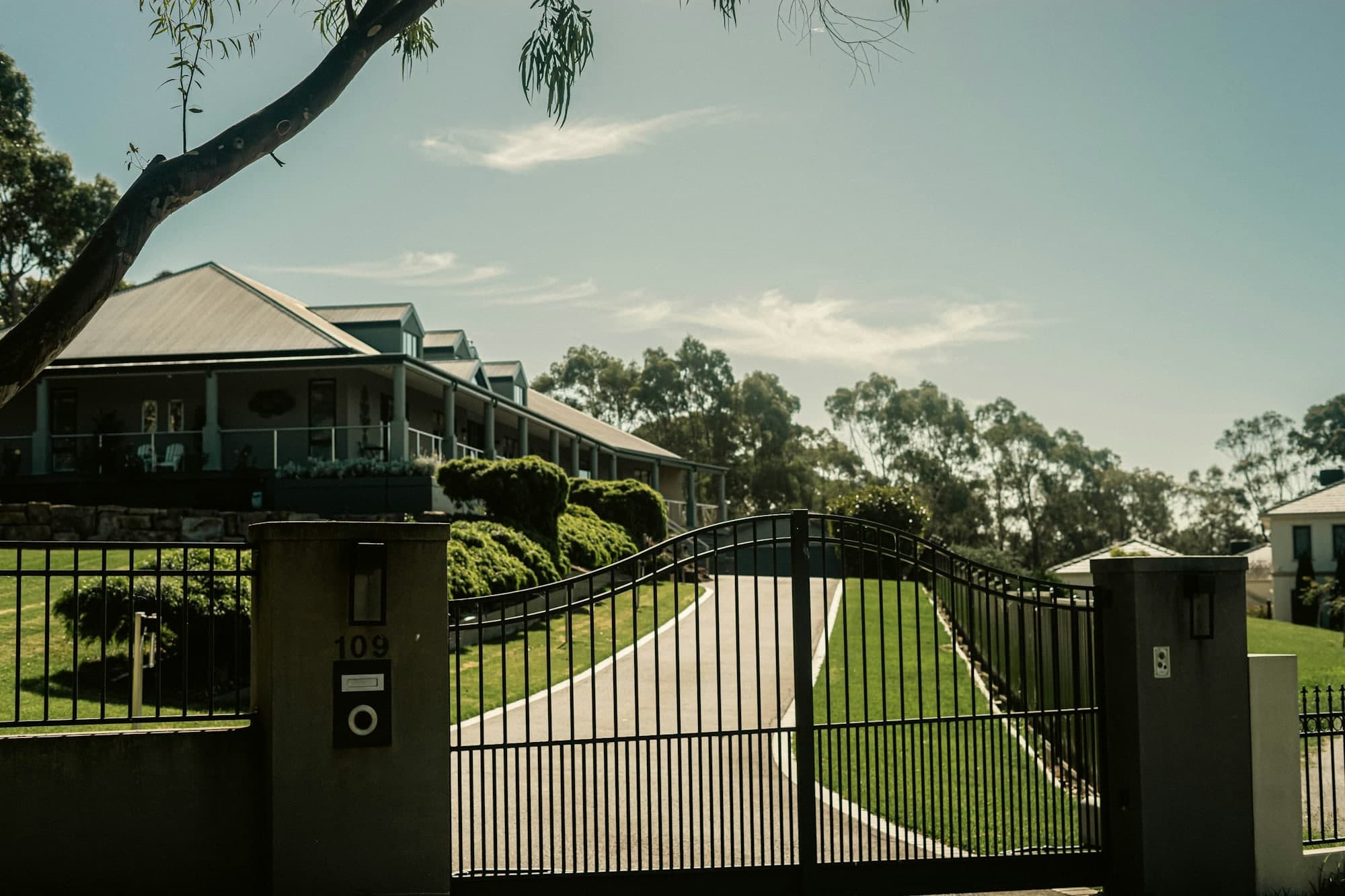
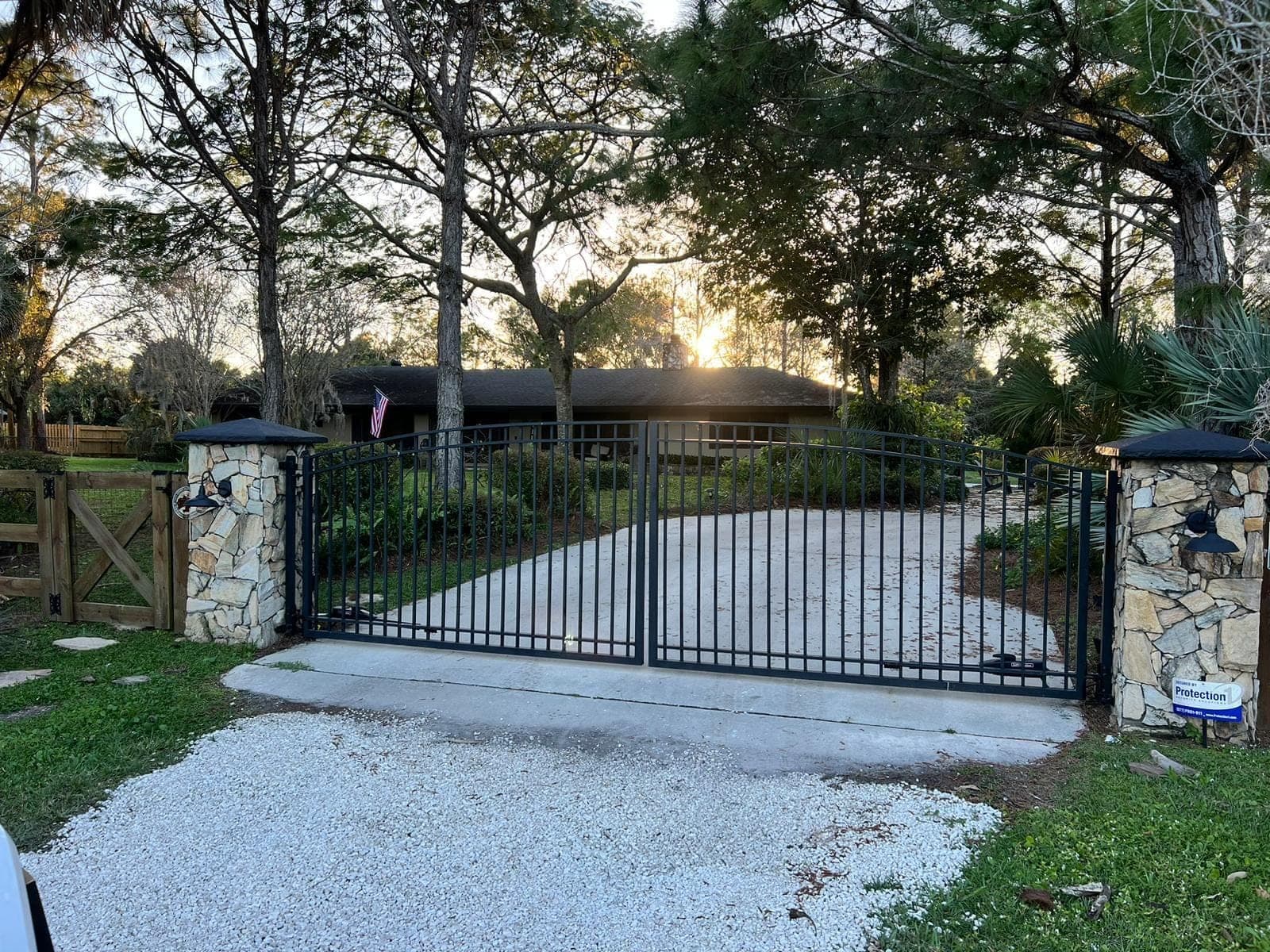
Wide driveway gate and railing photographed at dusk from the street
The view the committee is actually judging

Why applications come back

  • Incomplete package. By a wide margin the most common outcome and the most avoidable — a missing dimension or an unnamed colour sends the whole thing back a full review cycle.
  • Height over the limit, usually because finials or a decorative arch were measured differently by the applicant than by the guidelines.
  • Solid infill in a community that requires visual openness.
  • A colour close to the palette but not on it. "Near enough" is not a category committees have.
  • Style inconsistent with the streetscape — modern horizontal slats on a street of ornamental iron, or the reverse.
  • Equipment left out of the drawing. An approved gate with an unapproved callbox pedestal in front of it is a second application.

Sequencing the project so approval is not the bottleneck

Committees meet on their own schedule — monthly, quarterly, or whenever enough applications have accumulated. That cadence, not the drawing, sets your timeline, so the goal is approval on the first pass rather than speed at re-submitting.

  1. Get the guidelines and read them first.
  2. Measure the opening and note the constraints that are physical rather than aesthetic — slope, setback, distance to power, what the driveway is made of.
  3. Design inside both sets of constraints at once, rather than designing and then trimming.
  4. Assemble the full submittal package and submit it complete.
  5. Wait for written approval and keep it. Verbal approval from a board member is worth nothing when the committee changes.
  6. Then pull the permit, then order material, then schedule the work.

Ordering steel before written approval is how a gate ends up in a shop while a committee asks for a different picket profile. Approval is a timeline cost as much as anything, which is one of the line items people leave out when they compare quotes — the same problem described in what actually drives the cost of a driveway gate.

When the gate belongs to the community, not to you

A shared entrance is a different animal. The gate is a common element, the decision-makers are a board rather than an owner, and the failure mode is deferred maintenance rather than aesthetics. Community entrances run cycle counts a residential gate never approaches, which means duty-rated equipment, real safety devices and a maintenance plan rather than a repair habit.

  • Boards are usually deciding between repairing a tired entrance and replacing it, on a budget set before anyone knew the answer.
  • Access administration matters more than hardware: who issues credentials, who removes them when a resident sells, and who answers the callbox.
  • Throughput at the morning peak drives the operator class more than the width of the opening does.

The gate projects that go smoothly in Weston, Parkland, Boca Raton and every other deed-restricted community on the coverage list are the ones where the guidelines were read first and the drawing answered them line by line. We build to whatever the approved design turns out to be, including matching an existing community style in the shop. Send us the guidelines and the opening and the design can start inside the rules rather than beside them.

Sources

The bodies that publish the standards and rules named above. Every link goes to the organisation itself, so anything asserted here can be checked at the source rather than taken on our word.

Published by Local Gate Repairs on , last revised . Written by the business rather than by a named author — this site does not publish a byline it cannot stand behind. General guidance for South Florida properties: every gate, driveway and operator is different, and permitting is administered locally, so treat this as a starting point rather than a specification for your own entrance. What this site does and does not claim is set out in full on standards & sources.

Next step

It starts witha drawing.

On-site consults across South Florida. You see the gate on your own entrance before you commit to anything.

Call NowGet a Quote