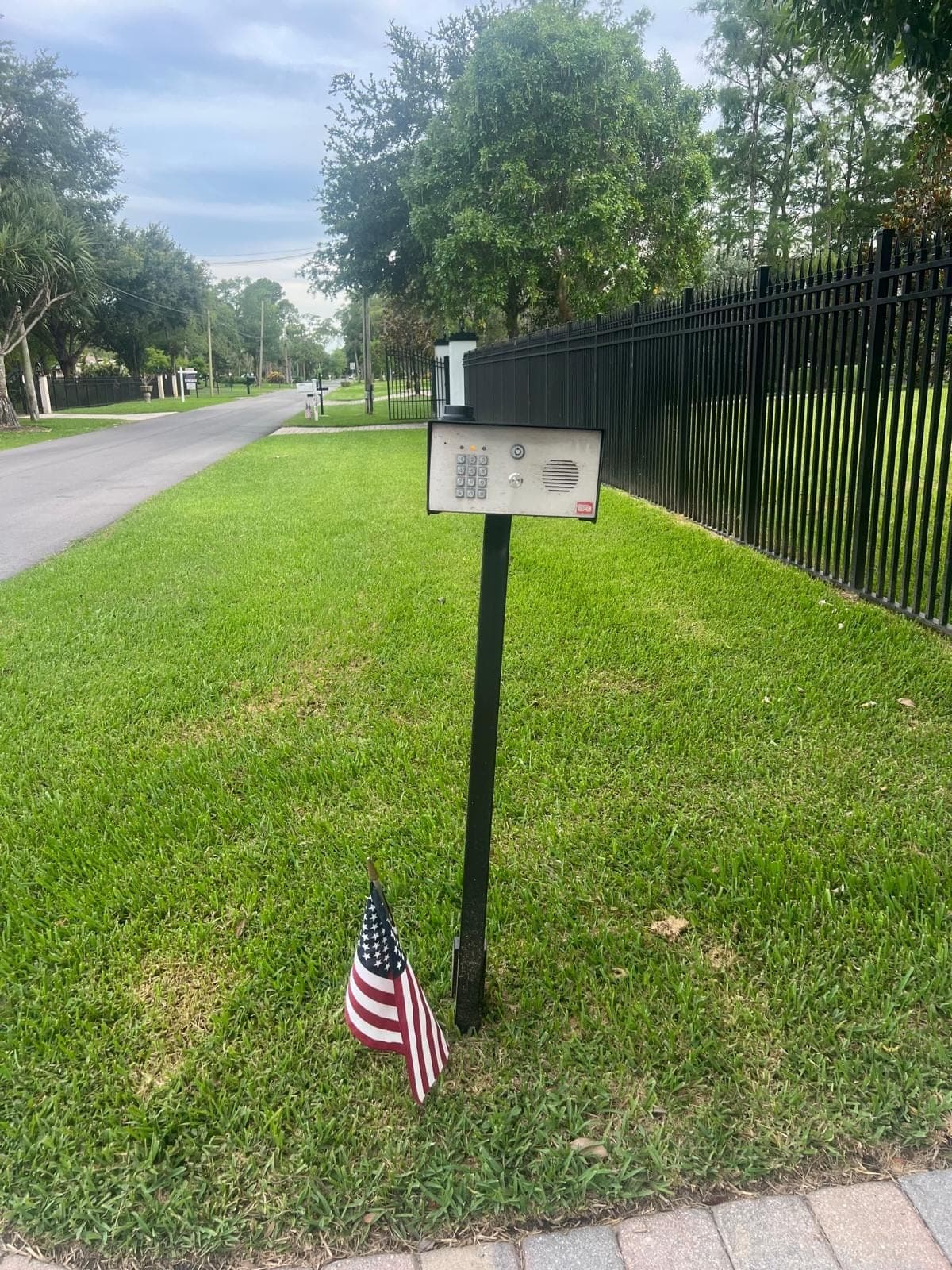
Finished intercom and callbox post beside a gated driveway entrance

Access · Everyday use

A gate keeps strangers out. The daily problem is the twenty people a month who are not strangers — couriers, cleaners, landscapers, guests, contractors — and the single shared code that everyone in the neighbourhood now knows.

July 31, 20266 min read1,298 words

Most people specify a gate around the threat and then live with it around the traffic. The threat is occasional. The traffic is constant: a courier at eleven, the pool service on Tuesday, a landscaping crew in two trucks, a cleaner, a food delivery at eight, and dinner guests calling from the street because they do not know the code.

Which device you install is a smaller question than most buyers think. The comparison between the devices themselves is covered in keypad, intercom, phone entry or RFID. This is the part that comes afterwards and matters more day to day: who gets what, for how long, and what happens when they no longer should have it.

Start with the list of people, not the list of products

Write down every category of person who arrives in a normal month, and against each one put how often, at what time, and whether you are usually home. It takes ten minutes and decides the whole specification.

  • Household. Daily, both directions. Wants zero friction and no phone in hand — this is what a vehicle credential is for.
  • Recurring service. Weekly, in a predictable window, often when nobody is home. Wants its own credential, revocable without disturbing anyone else.
  • Deliveries. Unpredictable, a different driver every time, no interest in your system.
  • Contractors and guests. Intense or occasional, then never again. Want access that expires, or somebody to let them in.
  • Emergency services. Rare, non-negotiable, never dependent on a remembered code.

Those groups have genuinely different requirements, and serving all of them with one shared four-digit code is the origin of nearly every access complaint we hear.

One credential per group, and why the shared code fails

A single code given to everybody has one fatal property: it cannot be taken back from one person. When the landscaper changes crews or a contractor finishes, the only way to remove their access is to change the code for everyone — including the family, who are then locked out until told the new one. So it never gets changed, and the code slowly becomes public.

  • Issue a separate code per group, and where the system allows it, per company. Per-code log entries then tell you who came and when; a shared code tells you nothing.
  • Use expiring codes for anyone temporary. A code that dies on its own cannot be forgotten.
  • Where the system supports time restrictions, keep service codes inside the window they actually work in. A pool code that only functions on weekday mornings is a smaller liability than one that works at 2am.
  • Never the house number, the year, or repeated digits. Those get tried first.

The delivery problem specifically

Deliveries are the hardest case: no persistent relationship, a different driver every time, under time pressure, with no reason to learn your entrance. There are four workable approaches and each has a real cost.

  1. Leave the parcel outside, in a secure box or a screened recess by the gate. Zero access granted, but the parcel sits in the weather and in view — which in a summer downpour is not nothing.
  2. Answer the callbox. A phone-entry or cellular unit rings your mobile and you release the gate remotely. This works well and depends entirely on you being reachable.
  3. Use whatever access programme the carrier offers. Some operate their own credentialed entry systems a compatible controller can integrate with. Availability varies, so confirm it rather than assume it.
  4. Give the driver a code. Most households drift into this, and it quietly ends with the code written on a clipboard and passed around a depot. If you do it, use a dedicated delivery code and change it on a schedule.

None is obviously correct; it depends on how often you are home and what a missed delivery costs you. What is definitely wrong is granting a permanent shared credential to an unbounded set of strangers and then being surprised.

Callbox on a gooseneck post standing on the verge beside a driveway and fence
Reachable from a truck window, at the right height, on the right side

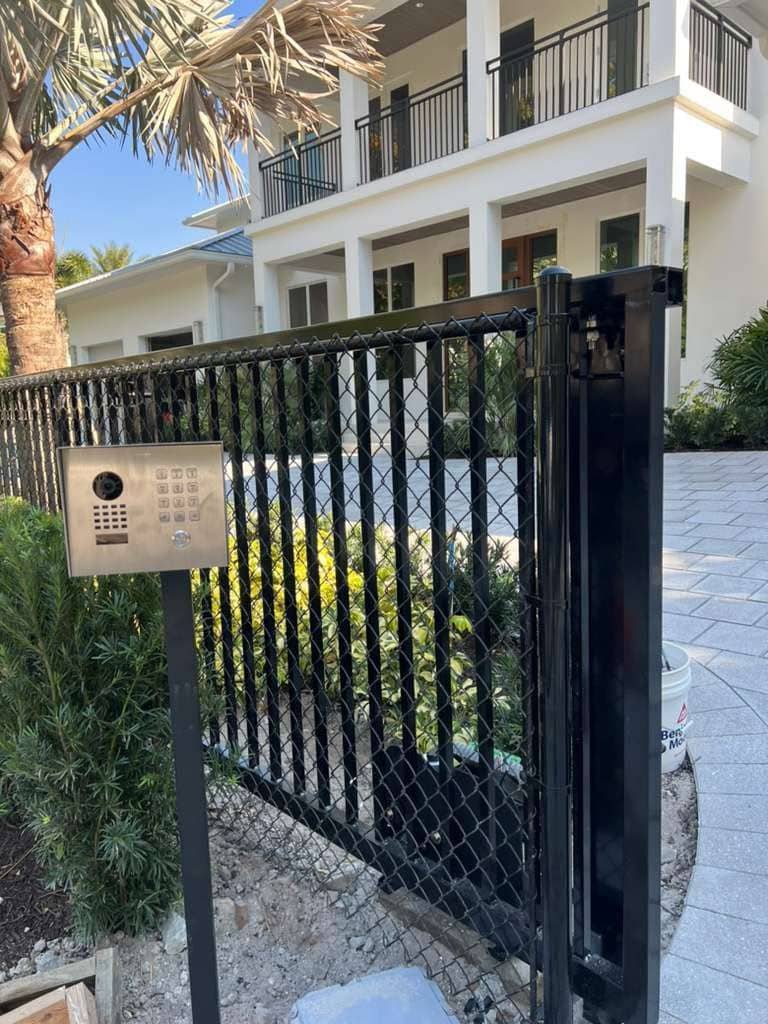
One physical detail decides more delivery outcomes than any of the above: where the callbox is. It has to be reachable from a driver's window without them getting out, set back far enough that a waiting vehicle is off the road, at a height that works for a box truck and a low car, and lit enough to read after dark. A perfectly specified system in the wrong place produces drivers who leave.

Hold-open schedules and the trap inside them

Many controllers can hold a gate open on a timer — a morning rush, a party, a renovation. Genuinely useful, routinely misused.

  • A timed gate closes at the end of the window whether or not the last vehicle has cleared. Anything in the opening then depends on the safety devices being healthy.
  • Propping a gate open with a brick or a wedge is worse than a timer. The operator still believes it is in control, and it fights the obstruction until something gives.
  • If a gate is held open daily because the household finds it annoying, the problem is not security policy — it is a slow gate, a badly placed reader or a credential nobody wants to use.

Getting out, and the tailgating everyone does

Exit is usually automatic: a buried loop detects a vehicle approaching from inside and opens the gate without a credential. That is correct — egress should never depend on remembering a code.

It also creates the commonest way people get through a gate uninvited: a vehicle waiting outside follows the departing car in. No technical fix is worth its cost on a private driveway, but a behavioural one is free — watch the gate close in your mirror before you drive away.

The pedestrian version matters more. A vehicle gate is not a pedestrian gate, and people walking through a closing one is the exact scenario the safety standards exist for — which is why photo eyes and edge sensors are not accessories. Where people regularly arrive on foot, they should have their own pedestrian gate.

Parties, house-sitters and being away

Two situations break a well-organised access system: the evening with thirty guests, and the fortnight nobody is home.

  • For an event, use a hold-open window with a defined end rather than handing the household code to thirty people, and give somebody the job of closing it.
  • For a trip, issue a house-sitter credential that expires the day you return, and check that everyone holding a service credential still should.
  • Before you go, run one full cycle and test the safety devices. Coming home to a gate that failed on day two is a bad end to a holiday.

A gate that is pleasant to live with is not the one with the most expensive reader. It is the one where every group who legitimately turns up has a way in that can be taken away again. We set up and re-organise access control on existing gates as well as new ones, across Miami, Pembroke Pines, West Palm Beach and the rest of the coverage list. Tell us who arrives at your gate in a normal week and the system can be built around that list.

Published by Local Gate Repairs on . Written by the business rather than by a named author — this site does not publish a byline it cannot stand behind. General guidance for South Florida properties: every gate, driveway and operator is different, and permitting is administered locally, so treat this as a starting point rather than a specification for your own entrance. What this site does and does not claim is set out in full on standards & sources.

Next step

It starts witha drawing.

On-site consults across South Florida. You see the gate on your own entrance before you commit to anything.

Call NowGet a Quote